
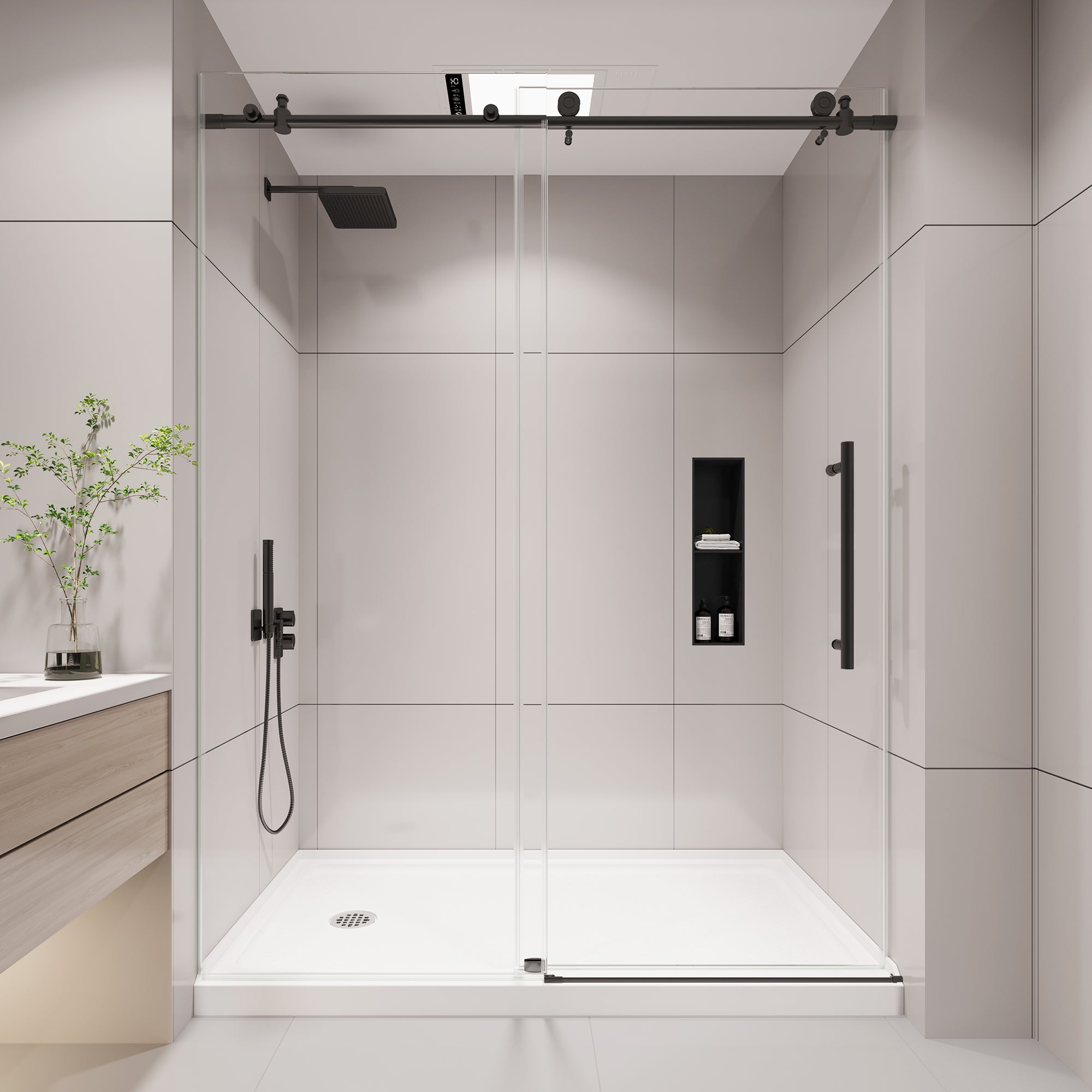

Every remodeler and homeowner asks the same practical question: can you install a shower base over a wood subfloor without tearing the floor down to the joists? Short answer: yes — but only when you follow specific structural and waterproofing steps. With curbless showers and prefab bases trending in 2026, homeowners want faster installs and cleaner floors. That puts pressure on contractors to make safe, code-compliant choices over existing wood subfloors instead of ripping everything out.
Quick Answer
Yes, you can install a factory shower base over a wood subfloor if the framing and surface meet structural and flatness requirements, the drain rough-in is correct, and you use an approved waterproofing system. The must-have items are solid subfloor stiffness (no bounce), a level or shimmed base installation, a properly sealed drain flange, and a full waterproof membrane where required by code.
For homeowners who prefer a one-piece solution, a quality prefab base often reduces tile work and long-term leak risk when installed correctly. If you’re leaning that way, see this collection of Shower Bases for style and size options.
Key Considerations Before You Start
- Subfloor stiffness: The wood subfloor must be free of spring or flex. I look for less than 1/360 deflection under load at the drain area before installing a brittle acrylic or terrazzo base.
- Rot and delamination: Any soft spots or delaminated plywood must be repaired — that often means sistering joists or replacing plywood to a full structural panel.
- Rough-in dimensions: Confirm the drain center, wall locations, and door swing early. Prefab bases require the drain to land within a tolerance (usually ±1/4" to 1/2").
- Waterproofing strategy: Decide whether the base itself is the waterproof plane or if you’ll install an independent membrane (e.g., bonded PVC or liquid-applied membrane) to the subfloor and walls.
- Local codes and standards: Follow IPC/UPC plumbing rough-in rules and local amendments. For shower door safety and glass, be aware of ANSI Z97.1 tempered glass requirements for wet-area doors.
Subfloor Prep and Repair
Prep is where most installs make or break. I start by measuring rigidity and flatness with a straightedge and a 2-foot level. Most manufacturers call out a maximum warpage or gap under the base — if you can stick a 3/16" feeler at the base footprint, that's a red flag.
Common fixes:
- Replace any rotted plywood. Use 3/4" CDX or OSB where the manufacturer requires full-thickness panels.
- Add blocking between joists under the drain area to eliminate bounce.
- Sister joists if you find sagging spans. Verify nail pattern and adhesive where panels meet.
- Install a 1/2" exterior-grade plywood underlayment if manufacturer allows, glued and screwed to reduce movement.
When installing over existing finish flooring, you’ll often need to lower surrounding finished thresholds or build a curb — plan for transitions. If you prefer a full waterproof plane, apply a liquid membrane over the prepped wood and extend it up the walls per manufacturer directions.
Installation Methods for Prefab Bases
There are three common methods to install a prefab shower base over wood:
- Direct-seat on solid subfloor: Base bedded onto a thin mortar setting bed or manufacturer-approved adhesive. This requires a flat, stiff subfloor.
- Screwed plywood cradle: Build a support frame under the base to eliminate movement; used when subfloor is marginal or to create a recessed drain slope.
- Raised curb with membrane: Install waterproof membrane over the subfloor, then set the base on the membrane, sealing the drain flange to the membrane for a full secondary protection.
Manufacturer tolerances vary. Many acrylic bases allow a 1/4" gap tolerance at the threshold but expect the drain to be within 1/4"–1/2" of center. For stone-resin or brittle bases, tighten tolerances and consider a mortar bed to support the entire footprint.
When fitting a shower base against out-of-plumb walls, scribe and shim the base as needed. Use non-compressible shims to preserve slope integrity and avoid relying on caulk as a structural seal.
Drain Rough-in and Slope Requirements
The drain is the heart of a successful install. Typical steps and rules I follow on site:
- Verify drain location from the base manufacturer template before cutting the subfloor.
- Use a rigid drain flange and secure it to the subfloor. A loose flange leads to leaks.
- Maintain at least 1/4" per foot slope to the drain in traditional tiled showers; prefab bases have factory slope, but the subfloor and drain plane must match that slope at the flange.
- Check trap accessibility — UPC/IPC requires accessible traps for some installations depending on local code.
When installing a curbless prefab base over wood, lower the adjacent floor if needed to maintain ADA or threshold requirements. I often route the subfloor to fit a recessed drain assembly and frame the joists to reduce travel of the drain adapter.
Tools, Materials, and Tolerances
- Materials: thin-set mortar (modified), polyurethane sealant, rigid PVC or ABS drain flange with stainless screws, liquid-applied membrane (if required), exterior-grade plywood for repairs.
- Tools: straightedge, level, oscillating tool for scribing, 3/8" chisel, torque screwdriver, drain flange gauge, moisture meter.
- Tolerances: aim for ±1/4" drain position tolerance, maximum 1/8" deviation under the base footprint when checked with a 2-foot straightedge unless the manufacturer allows more.
Remember: a misaligned drain or a flexible subfloor will cause stress on the base, leading to cracks or leaks later. Use stainless fasteners where exposed to moisture and follow torque specs to avoid crushing plastic flanges.
Real Jobsite Experience
On older houses I work on, walls are almost always out-of-plumb and the original floor has been through decades of patching. One recent Portland remodel had a 1-1/2" difference across a 5' wall. We had to shim the prefab base, fur out the studs for a square wall plane, and install a full liquid membrane because the client insisted on keeping original hardwood floors up to the bathroom doorway. Those on-the-fly fixes — sistering joists, adding blocking, and careful flange sealing — are the difference between a one-season repair and a 20-year install.
In practice, expect to encounter:
- uneven subfloor transitions at old tile floors;
- narrow rough-in tolerances caused by previous plumbing moves;
- need to plan for tempered glass shower doors — allow at least 1/2" clearance for adjustments and check ANSI Z97.1 and local safety codes.
Options Comparison
| Option | Pros | Cons | Best Use |
|---|---|---|---|
| Prefab shower base on solid subfloor | Quick install, factory slope, low maintenance | Requires stiff subfloor and precise drain rough-in | Standard bathtubs-to-shower conversions |
| Prefab base on reinforced cradle | Handles marginal subfloors, reduces bounce | More labor, slightly higher curb | Older homes with flexible floors |
| Tiled mud bed over wood | Custom size, seamless with tile | High risk of movement unless decoupled; takes longer | High-end custom projects with full waterproofing |
| Curbless wet room | Modern, accessible, on-trend for 2026 | Requires major drainage planning and robust membrane | Barrier-free renovations and master baths |
Step-by-Step Checklist
- Confirm base model and manufacturer template for drain location.
- Inspect and repair subfloor to be stiff and flat. Add joist blocking if needed.
- Set and secure the drain flange; test-fit the base without adhesive.
- If required, apply a bonded waterproof membrane to subfloor and up walls.
- Set base on thin-set mortar or manufacturer-approved adhesive, level and shim at walls.
- Screw or fasten flange per instructions and seal with plumber’s putty or gasket per code.
- Complete wall waterproofing and tile or trim work. For glass doors, provide clearance and verify tempered glass thickness per ANSI Z97.1.
- Perform water test when possible before finishing walls.
For a more complete view on industry best practices, see the National Kitchen & Bath Association guidance on wet-area design and the International Code Council site for plumbing code considerations: NKBA and ICC.
FAQ
Can a prefab shower base be installed over 3/4" plywood?
Yes, if the plywood is in sound condition and the joist spacing is proper (typically 16" O.C. or as required). The plywood must not deflect under weight and should be fully supported. If there’s any bounce, reinforce the framing before installing.
Do I need a mortar bed under a prefab base?
Not always. Many manufacturers allow setting bases on thin-set mortar or adhesive. Use a mortar bed for stone-resin or heavy bases, or when subfloor irregularities require full support. Always follow the base manufacturer's installation guide for warranty compliance.
Will a prefab base work with a curbless entry?
Some prefab bases are designed for curbless installations, but they require exact thresholds and often a recessed drain. Expect more framing work and a full waterproof membrane to meet code and prevent water migration to adjacent floors.
Wrap-up
Installing a shower base over wood is a common, practical choice for many American homes. The job is straightforward when you respect subfloor stiffness, drain position tolerances, and waterproofing details. If you’re choosing a prefab solution, pick a model that fits your rough-in and consider reinforcing the subfloor where needed. For product selection, review available Shower Bases and match the manufacturer instructions to your site conditions.
If you need a site-specific recommendation, measure the drain location, note joist spacing, and document any out-of-plumb walls before you buy materials — those three numbers determine whether a direct-seat install or reinforced cradle is the right path.

Leave a comment
All comments are moderated before being published.
This site is protected by hCaptcha and the hCaptcha Privacy Policy and Terms of Service apply.