
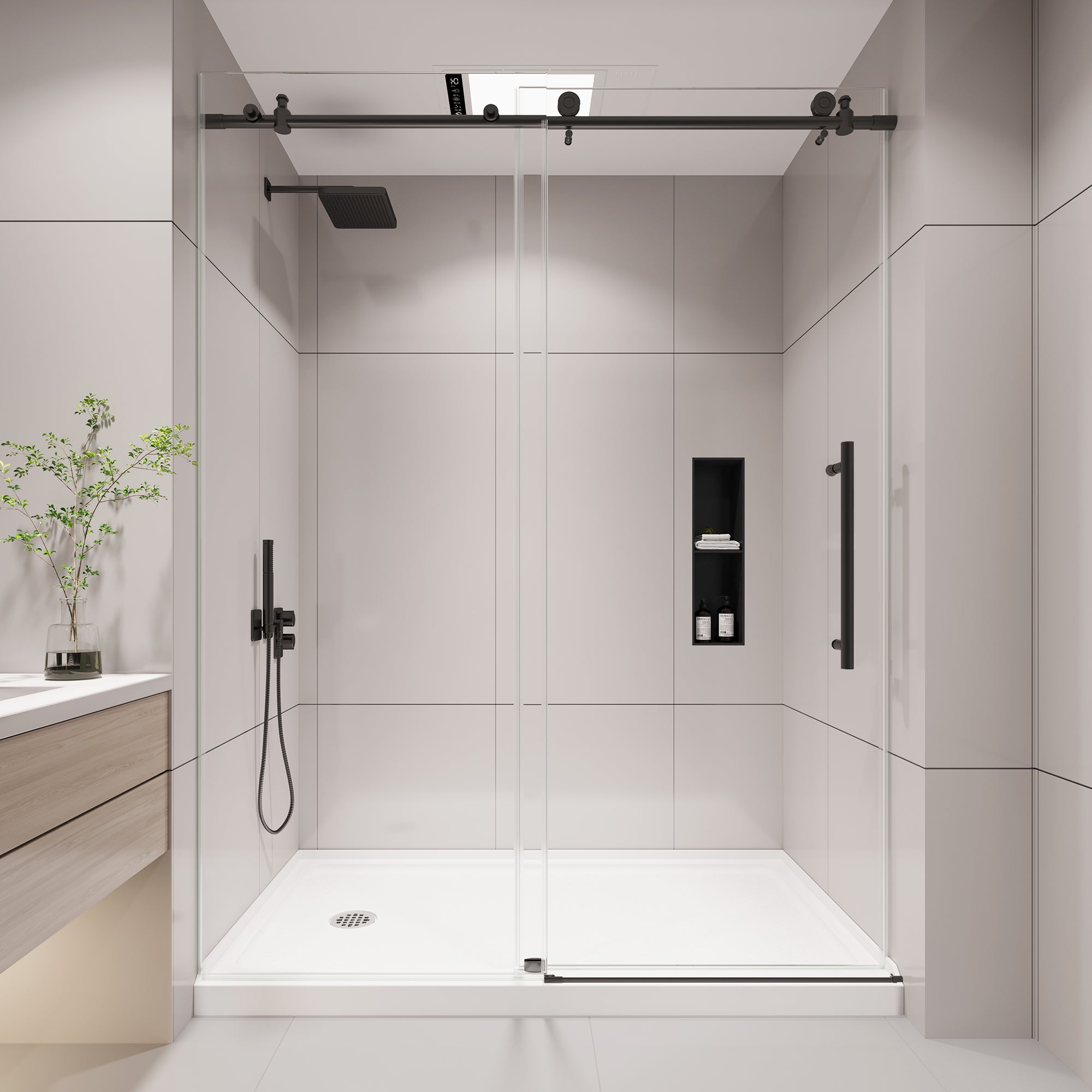
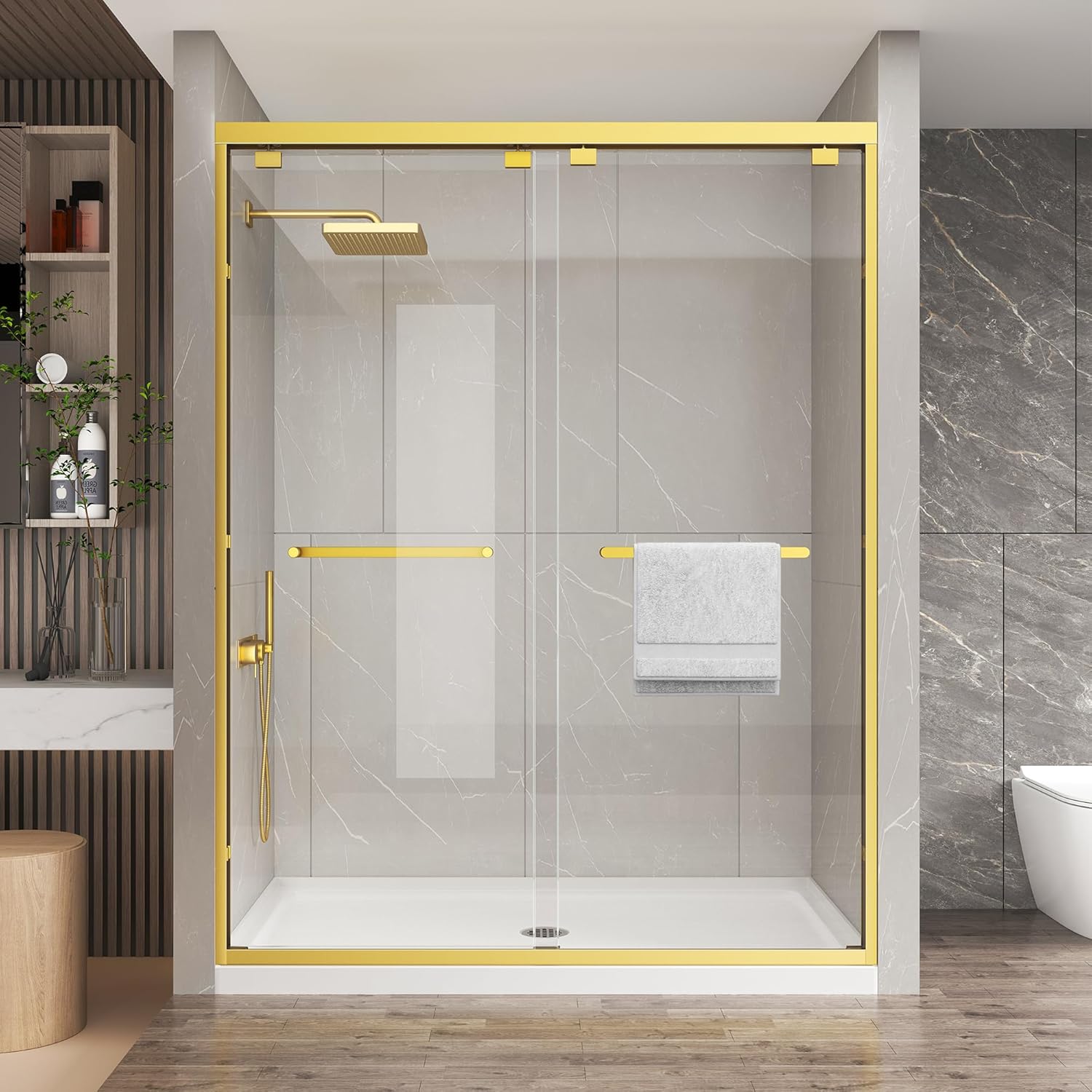
If your bath is a standard tub alcove, adding a door is often possible, but the answer depends on the opening, the tub rim, wall condition, and whether you want a swing door, sliding door, or fixed panel. The real check is not the old curtain space; it is the finished opening, wall plumb, and how well the door can contain water without fighting the tub layout.
The Short Answer
Yes, in many baths you can add a door, but the right door depends on the tub or shower opening, wall structure, and space outside the bath. A tub alcove may need a bathtub shower door, while a shower conversion may fit a sliding, pivot, or fixed-glass layout. Measure the finished opening first, then confirm clearance, wall plumb, and water containment before ordering.
What to Check First
Start with the finished opening, not the old product label. A bath door that looks simple on paper can run into trouble if the walls are out of plumb, the curb is uneven, or the tub deck is slightly sloped. Older homes often have walls that lean just enough to change the glass fit at the top and bottom.
If you are replacing a curtain over a tub, look at the tub rim width, wall finish, and the amount of splash control you need. If you are enclosing a shower, confirm the curb height, threshold slope, and where the door or panel will meet the finished tile. For many remodels, bathtub shower doors are the relevant starting point because they are sized for tub installations rather than walk-in showers.
Also think about the room outside the bath. A swing door can hit a vanity, toilet, or nearby towel bar. A sliding layout avoids swing clearance, but it needs straight walls and a track that is mounted level. A fixed panel can work in a compact bath, but it only makes sense if the opening and splash zone are controlled.
Door Types That Can Work in a Bath
Most bath-door decisions come down to layout and movement, not style alone. The door has to fit the opening, clear nearby fixtures, and keep water where it belongs. In practice, the best choice is usually the one that matches the room geometry with the fewest compromises.
| Bath door option | Best use case | Main advantage | Main limitation |
|---|---|---|---|
| Swing or pivot door | Rooms with clear floor space outside the bath | Easy entry and a wide opening | Needs door swing clearance |
| Sliding door | Alcoves with tight aisles or limited clearance | No outward swing | Track and wall alignment matter |
| Fixed panel | Open showers or partial bath enclosures | Simple layout with fewer moving parts | Less splash protection than a full door |
| Bathtub shower door | Tub conversions and curtain replacements | Better splash control at the tub | Must match tub rim and wall conditions |
For a tub, the door has to work with the tub deck, not just the wall opening. For a shower, the question is often whether the opening is straight enough for a smooth installation. If you want to review door styles after you measure, KPUY Shower Doors is the most general place to compare bath and shower enclosure formats.
- Use a swing or pivot door only if the outside floor area stays clear when the door opens.
- Use a sliding door when the room is narrow or a vanity sits close to the bath.
- Use a fixed panel if the opening is controlled and splash is manageable.
- Use a tub door when the bath is still a tub and the main problem is shower spray, not room access.
- Check wall straightness before ordering glass or hardware.

How to Measure the Finished Opening
Measure after the walls are finished if tile, backer board, or wall panels are still being installed. Tile thickness can change the final opening width enough to affect door fit. Do not measure the old opening and assume the new dimensions will be the same.
Take width measurements at the top, middle, and bottom. If the numbers are different, use the smallest finished width as your planning dimension unless the product instructions say otherwise. Also check height at both ends. A tub surround or shower opening can be level enough to look fine, yet still vary by a quarter inch or more.
- Measure the finished width at the top, middle, and bottom of the opening.
- Measure the finished height on the left and right sides.
- Check wall plumb with a level or straightedge.
- Measure the tub rim or shower curb depth where the door will sit.
- Confirm where the door, track, or panel hardware will land on studs or solid backing.
- Verify that the floor outside the bath and the curb slope will not push water in the wrong direction.
- Look for trim, casing, shelving, or fixtures that could block the door movement.
On remodel jobs, the drain can also affect planning even if it is not directly under the door. A drain that looks centered may not match the new base or curb placement, especially after demo reveals old framing repairs or patched subfloor. That matters more for a full shower conversion than a simple tub door replacement, but it should still be checked early.
Materials and clearance matter more than most homeowners expect
Glass thickness, frame depth, and hardware projection all affect the final fit. Frameless doors usually need more accurate opening measurements and better wall support. Framed options can be more forgiving in some remodels, but the walls still need to be close enough to true for the door to close correctly. If you are comparing minimal-hardware glass enclosures, Frameless Shower Doors is the most relevant collection to review.
Wall anchors are not a substitute for studs. If the mounting points do not line up with framing, the installer may need blocking added behind the wall surface. That is one reason bath-door planning should happen before final tile or trim details are locked in.

Installation Planning and Problem Areas
A bath door is easier to install when the opening is square, the walls are plumb, and the threshold is stable. Real homes rarely give you all three. That is why installers check for out-of-plumb walls, uneven floors, and slight variations in the opening before fastening anything permanently.
Here are the problem areas that cause most delays:
- Out-of-plumb walls: Even a small lean can change how a door closes or how glass panels meet at the wall.
- Uneven tub rims or curbs: If the base is not level enough, sealing becomes harder and gaps can show.
- Tile thickness: Finished wall depth changes where brackets and trim land.
- Door swing conflicts: Swinging panels may hit toilets, vanities, or towel bars.
- Track alignment: Sliding doors need a level, straight mounting line to move cleanly.
- Water containment: A door can fit physically and still splash water outside if the overlap or panel height is wrong.
For shower conversions, the curb slope should direct water inward, not toward the bathroom floor. Threshold height matters too. A low threshold can be easier to step over, but it may give you less margin for splash control. Plumbing codes and local requirements vary, so check details with a qualified pro or the relevant authority when the remodel changes the drain, waterproofing, or framing. For code context, the IAPMO and ICC resources are useful starting points.
Hardware finish is another practical choice, especially in 2026 remodels where homeowners are mixing warm wood tones, stone-look tile, and darker fixtures. Matte black hardware can sharpen the look, while brushed metal finishes can read softer. That is visual planning, not a performance claim. The real job is still the same: support the glass, seal the edges, and keep the door moving correctly.
What to Do Before You Order
A bath door order should be based on the finished conditions, not the rough opening. If you are remodeling a tub alcove, shower, or conversion, use this order of operations:
- Confirm whether the bath will stay a tub or become a shower.
- Measure the finished opening after tile or wall panels are set.
- Check for plumb walls and level reference points.
- Decide whether swing clearance exists or a sliding layout is safer.
- Verify stud locations or backing for hardware attachment.
- Confirm threshold height, curb slope, and water containment needs.
- Review glass thickness, frame style, and handle clearance against nearby fixtures.
For tub-focused layouts, the most relevant category is bathtub shower doors. For broader shower layouts, the door type should match the room, not the other way around.
One common remodel surprise: a vanity drawer may clear the room on paper but still hit the door casing or swing path after the new trim goes in. That is why it helps to mock up clearances before final fastening.
Frequently Asked Questions
Can I add a door to an existing bathtub?
Usually yes, if the tub alcove has enough finished width, a sound wall surface, and a rim or curb that can support the door system. The main checks are splash control, wall condition, and whether the door type fits the space. A tub door is different from a shower door, so measure and plan for the specific bath layout.
Do I need a frameless door for a bath remodel?
No. Frameless glass can work well in the right opening, but it is not the only option. In tighter or less perfect remodels, other layouts may be easier to fit. The deciding factors are wall plumb, hardware support, door movement, and how much room you have outside the bath.
What if my walls are not perfectly straight?
That is common in older homes. Slight out-of-plumb walls can affect panel fit, door alignment, and sealing. In some cases the opening can still work with the right door style and careful adjustment. In others, added blocking, trim changes, or a different door type will make the installation more realistic.
Final Takeaway
Yes, you can often put a door in your bath, but the right answer depends on the finished opening, the tub or shower layout, and how much clearance the room gives you. Measure the top, middle, and bottom of the opening, check the wall plumb, and look closely at curb slope, threshold height, and nearby fixtures before you order.
If you are planning a tub conversion or a replacement for a curtain setup, start with the bath-specific layout first, then narrow the door type from there. For a practical place to review styles and dimensions, the KPUY Shower Doors collection is a useful reference once you know what your opening can actually support.

Leave a comment
All comments are moderated before being published.
This site is protected by hCaptcha and the hCaptcha Privacy Policy and Terms of Service apply.