
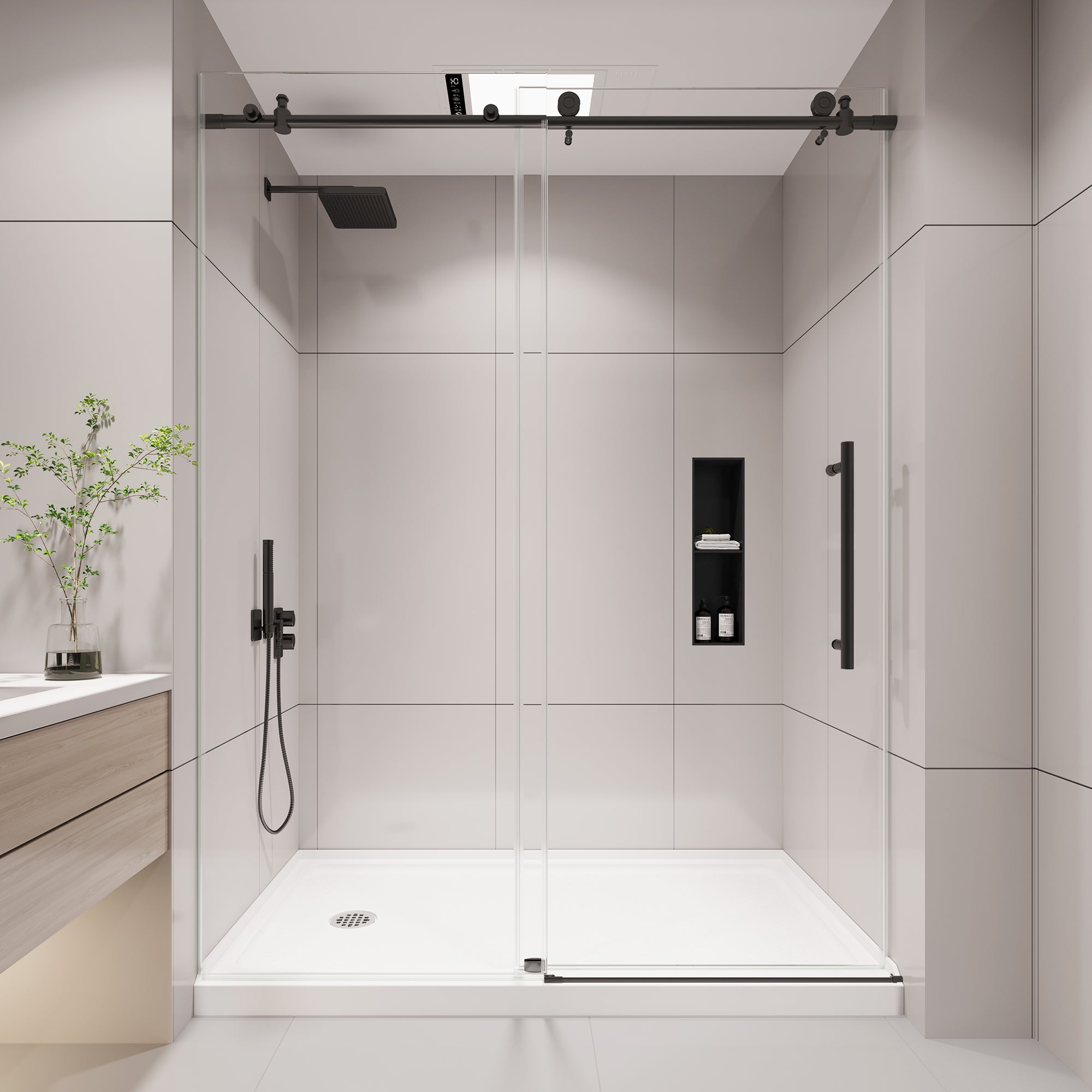
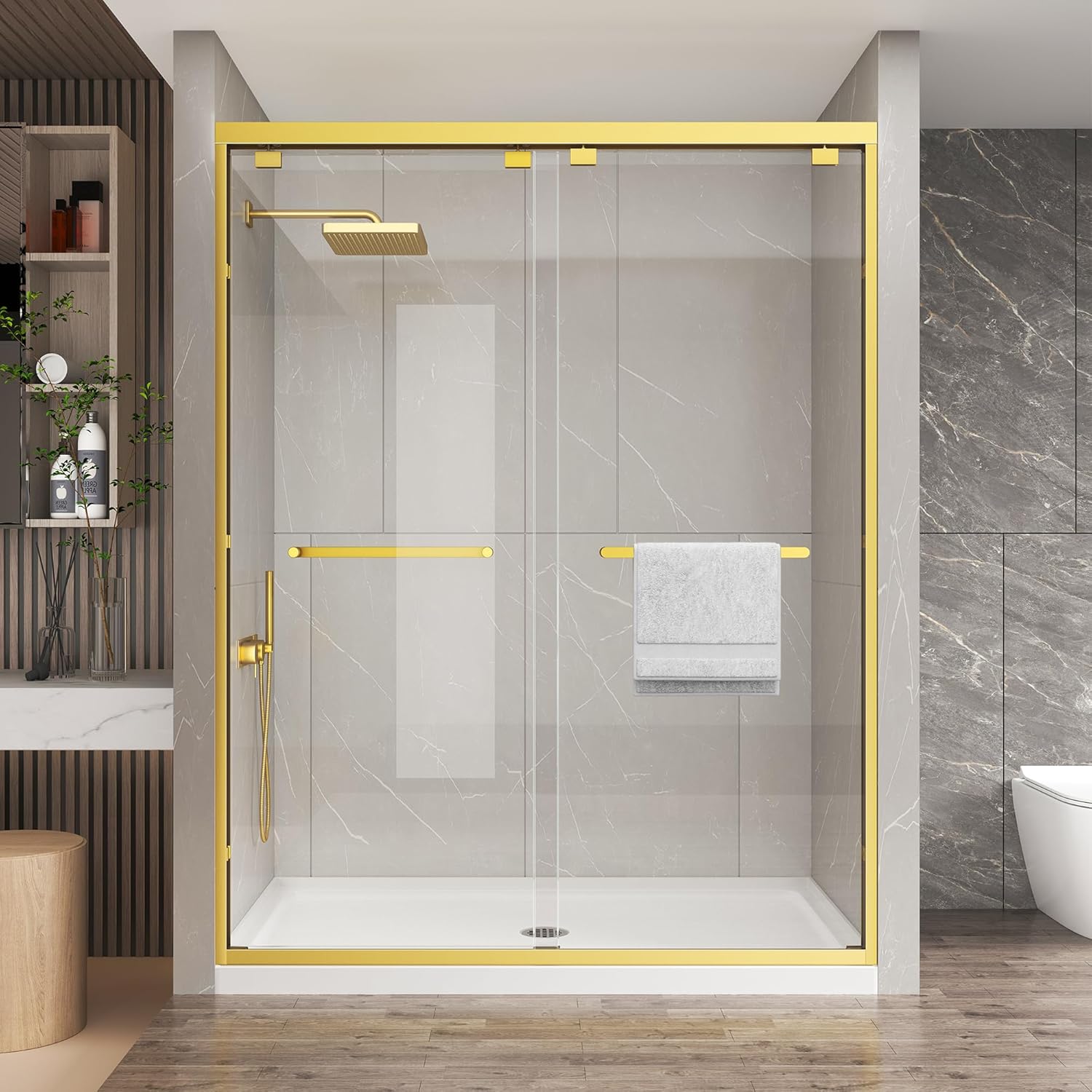
Matte black shower doors can make a bathroom feel grounded and intentional, but they can also take over a small room if the tile, lighting, and hardware proportions are not working together. The practical rule is simple: matte black works best when it has something to frame, such as white tile, light stone, glass, or a clean-lined shower opening; it feels too heavy when the room is already dark, the glass area is small, or the black finish repeats too often on bulky fixtures.
The Short Answer
Matte black shower doors work best when the bathroom has enough visual contrast, natural light, or open glass surface to keep the frame from dominating the room. They feel too heavy when the space is small, dark, or already packed with black fixtures and dark tile. A good rule of thumb: if the shower opening is narrow and the room is dim, keep the black profile lighter and simpler, or use it only where it frames the shower clearly.
Where Matte Black Works Best
Matte black is at its strongest when the shower door is part of a clear composition rather than the only dark object in the room. In a white-tile alcove, for example, black hardware gives the opening definition without closing it in. On clear glass, the frame reads as an outline instead of a block. That makes the shower feel organized, especially when the rest of the bathroom stays visually quiet.
It also works well in bathrooms where the plumbing fixtures already use black accents, such as a faucet, shower trim, or towel bar. The key is moderation. You want the finish to repeat in a few places, not everywhere. When the door, mirror frame, lighting, and cabinet hardware all go dark at once, the room can feel crowded fast.
Matte black also hides fingerprints and water spotting better than a bright polished finish in some homes, though it still needs regular wiping. On the visual side, it is strongest in rooms where there is good daylight or layered lighting. A bathroom with a single weak ceiling light can make any dark frame look thicker than it really is.
- Best fit: light tile, white grout, or pale stone that gives the frame a clean edge.
- Good pairings: black faucet, shower trim, or a small amount of matching hardware.
- Best glass choice: clear glass when you want the room to stay open and bright.
- Best lighting: bright vanity lighting plus enough ambient light to keep shadows down.
- Best layout: shower openings that are wide enough for the frame to read as a border, not a barrier.

When Matte Black Starts to Feel Heavy
Matte black starts to feel heavy when it stops acting like a frame and starts acting like a wall. That usually happens in small bathrooms, darker tile schemes, or rooms with too many dark lines competing for attention. A black shower door can also look oversized if the opening is short, the glass is narrow, or the frame is thicker than the layout can support visually.
Another common issue is repeated darkness. If the floor tile, vanity, mirror frame, towel bar, and shower hardware are all dark, the eye has little place to rest. The result is not necessarily bad, but it can feel denser and smaller than the homeowner expected. That matters in bathrooms where square footage is already tight.
There is also a practical remodel issue: the finish can look heavier if the installation details are rough. Out-of-plumb walls, uneven tile cuts, or a shower opening that was measured before finish tile went in can make the frame look crooked or bulky. Older homes often reveal wall issues only after the old door comes off. A shower door may fit the opening on paper and still feel visually off if the reveal lines are not even.
| Situation | What It Usually Means | Better Approach |
|---|---|---|
| Small bathroom with dark tile | The black frame can make the room feel tighter | Use more clear glass, lighter wall surfaces, and fewer dark accents |
| Low-light shower area | The frame reads thicker and more dominant | Add brighter vanity or ceiling lighting before choosing a dark finish |
| Too many black fixtures in one view | The finish becomes visual clutter instead of definition | Limit black to the door and one or two coordinated accents |
| Out-of-plumb opening or uneven tile lines | The door can look heavier because alignment issues stand out | Measure the finished opening at top, middle, and bottom before ordering |
A shower door collection such as Black Shower Doors is most useful once you already know the room can handle the finish visually. If the layout is still being finalized, check the finished opening, wall plumb, and lighting first so the frame does not become the thing that makes the room feel smaller than it should.
Wrong choice causes this problem: a black frame in a cramped, low-light room can make the shower look visually heavier than the actual hardware weight, and that often leads homeowners to regret the color choice even when the door itself is functional.

Quick Decision Table
If you are trying to decide whether matte black fits your bathroom, use the room conditions below as a shortcut. The finish choice should follow the layout, not fight it.
| Bathroom condition | Matte black usually works | Matte black may feel too heavy |
|---|---|---|
| Light tile and clear glass | Yes, the frame adds definition without closing in the room | Rarely, unless the frame profile is unusually thick |
| Small bathroom with limited daylight | Only if the black finish is used sparingly | Yes, especially with dark walls or floors |
| Neutral shower with mixed metal finishes | Yes, if black is repeated on a few intentional details | Only if the finish mix starts to look random |
| Compact shower opening | Yes, if the opening is visually clean and the glass stays clear | Yes, if the frame is the only thing you notice from the room |
| Bright bathroom with simple tile lines | Yes, the contrast usually reads crisp and orderly | Less likely, unless the rest of the room is already dark |
What to Check Before You Order
Do not choose finish first and measure later. Start with the finished opening, not the old door label or the rough framing size. Tile thickness, backer board, and wall build-up can change the final opening enough to affect both the fit and the visual balance of the frame.
- Measure the finished shower opening at the top, middle, and bottom if the door spans wall to wall.
- Measure the opening height on both sides to see whether the walls are level or slightly out of square.
- Check the wall plumb with a level, especially in older homes where one wall may lean just enough to affect the reveal.
- Confirm that the shower curb or threshold slopes back toward the drain, not toward the bathroom floor.
- Look at nearby fixtures and clearances, including the toilet, vanity, drawers, towel bars, and door casing.
- Check whether the chosen finish will repeat naturally in the room or whether it will become the only dark object in view.
- Verify that the hardware can clear tile edges, trim, and any uneven surfaces before ordering or scheduling installation.
For a matte black door, the visual test is as important as the measurement test. A room can be perfectly measured and still feel wrong if the black frame conflicts with the lighting or tile scale. If you are still comparing styles, the broader KPUY Shower Doors collection is a practical place to compare enclosure types before narrowing down to a finish.
One common remodeling surprise is that a vanity drawer may clear the room on paper but still feel crowded once the shower frame and trim are installed. Another is that a shower opening can measure differently at the top and bottom after tile is in place. Those are the kinds of details that decide whether a black door looks intentional or oversized.
How to Balance Finish, Glass, and Lighting
Matte black works best as a border around the shower, not as a visual weight pulling everything downward. Clear glass helps because it keeps the enclosure from becoming a dark block. If you want the bathroom to feel open, the glass should do most of the visual lifting while the frame defines the edges.
Lighting matters more than many homeowners expect. With poor lighting, matte black absorbs the room rather than shaping it. With good light, it looks crisp and deliberate. That is why a bathroom with balanced vanity lighting and enough ambient light usually handles black hardware better than a room that depends on one dim ceiling fixture.
Finish coordination also matters. Matte black pairs well with white tile, light gray tile, natural stone tones, and simple grout lines. It can also work with wood vanity finishes if the rest of the room stays restrained. The problem is not black itself; the problem is too many competing dark finishes without enough open surface to reset the eye.
If you are planning a remodel, think in layers:
- Tile sets the background tone.
- Glass controls how open the shower feels from outside.
- Hardware finish adds contrast or blends in.
- Lighting decides whether the black frame feels crisp or heavy.
That ordering keeps the finish choice grounded in the room instead of in a sample alone. Matte black can look clean and sharp in one bathroom and overly dense in another with nearly the same door style. The difference is usually not the door; it is the room around the door.
Frequently Asked Questions
Does matte black make a bathroom look smaller?
It can, but not automatically. Matte black usually makes a bathroom feel smaller when the room is already dark, the shower opening is tight, or there are too many black fixtures in the same sightline. In a bright bathroom with clear glass and light tile, black hardware often works as a sharp outline instead of a visual block.
What type of tile works best with black shower doors?
Light tile is the safest pairing because it gives the frame clear contrast. White subway tile, light gray porcelain, and pale stone tones all help the door read as a border rather than a heavy surface. Dark tile can still work, but it usually needs stronger lighting and more open glass to keep the shower from looking closed in.
How do I know if the finish will feel too heavy in my bathroom?
Look at the room in plain daylight and with the lights on. If the shower opening disappears into the background, the bathroom already has enough visual weight. If the black frame is the first and only thing you notice, it may be too much. Also check the wall color, floor color, and nearby fixtures together, not one at a time.
What to Check Next
If matte black is on your list, judge it against the room conditions first: light level, tile color, opening size, and how much other dark hardware is already in view. A black shower door should frame the shower, not overwhelm the bath. If the layout supports that balance, focus on the finished opening and hardware clearance before ordering. If you are comparing styles and finishes, the Black Shower Doors collection is the most relevant place to narrow the options once the room is measured and the design balance makes sense.

Leave a comment
All comments are moderated before being published.
This site is protected by hCaptcha and the hCaptcha Privacy Policy and Terms of Service apply.