
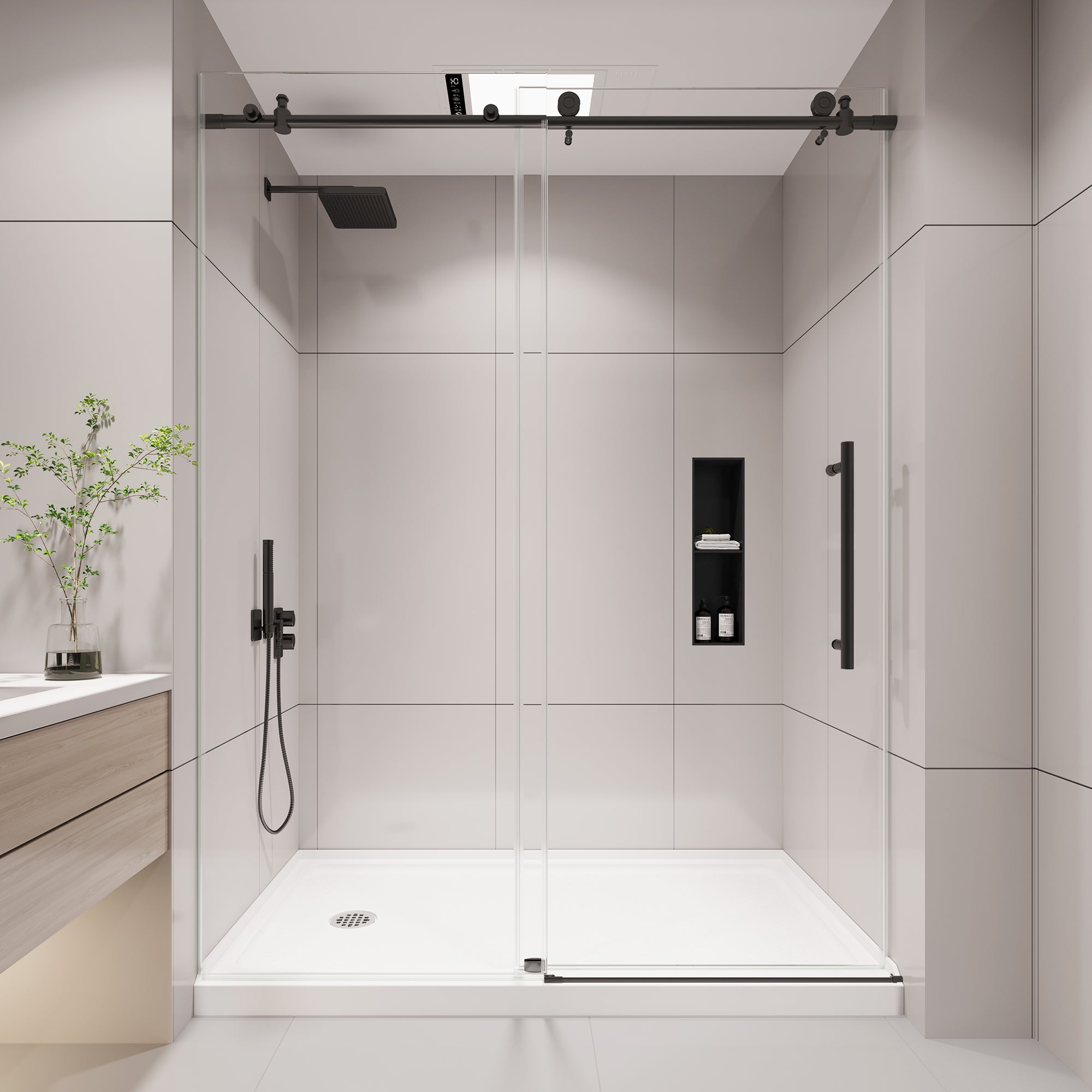
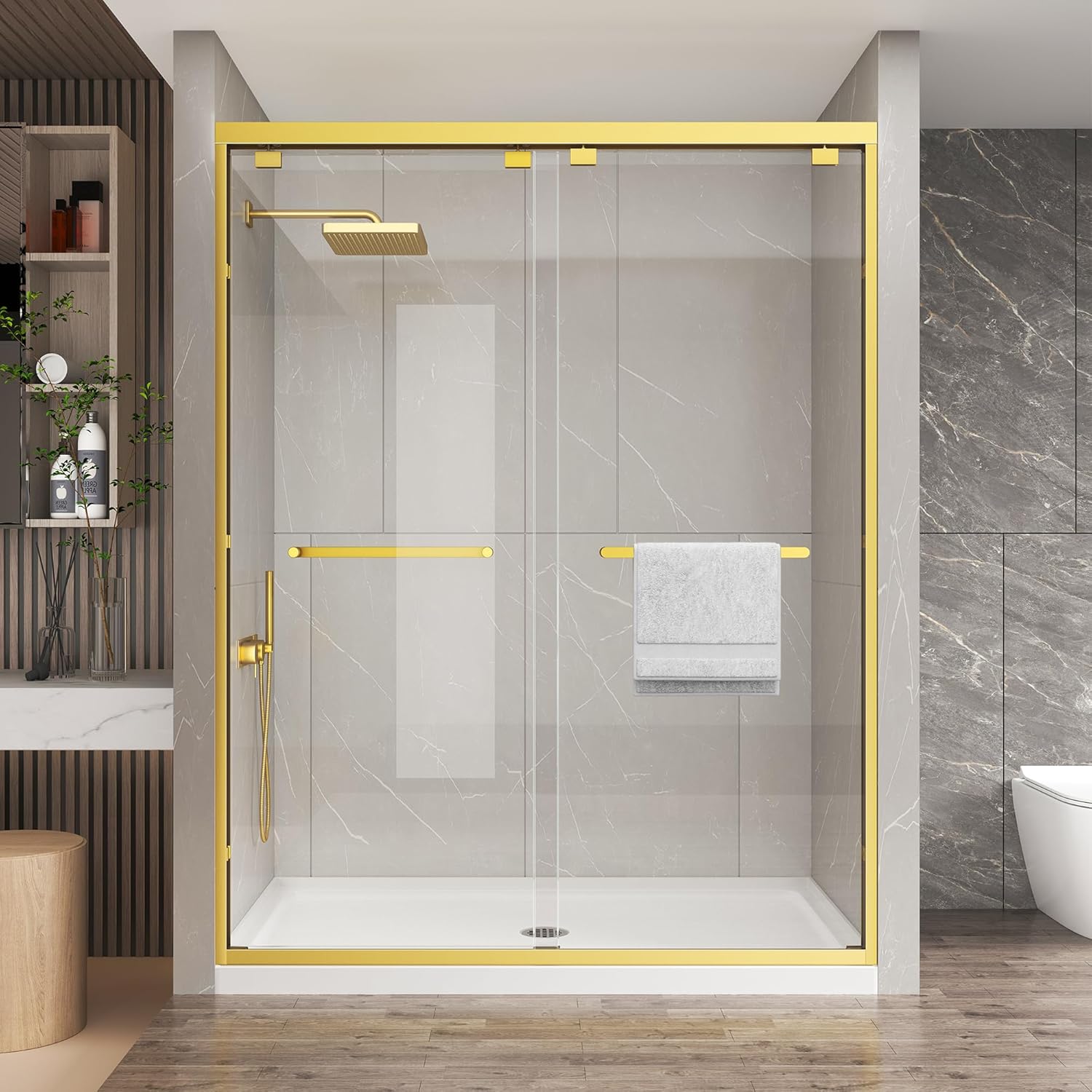
Black shower doors work well in a modern farmhouse bathroom, but the finish can look out of place fast if the layout, glass style, or hardware details are wrong. The most common mistakes are too much visual contrast, the wrong door swing for a tight room, and poor measurement after tile and wall finish changes. Start with the finished opening, the curb, and the surrounding fixtures before you choose the door style.
The Short Answer
Black shower doors can look right in a modern farmhouse bathroom, but avoid oversized contrast, wrong-door clearance, and rushed measurements. The biggest misses are mismatched finishes, a door that hits a vanity or toilet, and glass that does not account for out-of-plumb walls or finished tile thickness. If the room is tight, a sliding layout or a fixed panel often works better than a swing door.
What Makes Black Doors Look Wrong in a Farmhouse Bath
Modern farmhouse design usually relies on balance: warm textures, simple lines, and just enough contrast to feel intentional. Black shower doors fit that style when they tie into the room instead of dominating it. The mistake is treating the door like a standalone feature. If the room already has dark tile, strong cabinet hardware, and black plumbing trim, another heavy black frame can make the shower feel visually crowded.
Another common issue is mixing too many finish temperatures. Matte black hardware pairs well with white tile, soft gray grout, light wood vanities, and clean-lined fixtures. It can look harsher next to busy stone patterns or highly reflective chrome if the rest of the room is trying to feel relaxed and understated. In farmhouse spaces, the goal is usually contrast with restraint.
If you are still sorting out the enclosure type, the Black Shower Doors collection is a practical place to compare styling and layout options without overcomplicating the room. Focus on how the door frame, handle, and glass line up with the rest of the bath, not just the color.
- Avoid heavy contrast everywhere. Let the door be one accent, not the only dark element.
- Match the visual weight. Thick frames can feel too industrial in a soft farmhouse room.
- Keep the palette simple. White, warm gray, wood tone, and black usually work better than multiple competing finishes.
- Watch the glass clarity. Very patterned tile behind a dark frame can look busy if the lines fight each other.
Measurement Mistakes That Cause Installation Problems
The most expensive mistakes happen before the door is ordered. A shower opening rarely stays the same width from top to bottom, especially in older homes. I have seen a shower measure one width at the top, another in the middle, and a third at the bottom after tile work was finished. If you only measure once, you can miss an out-of-plumb wall or a curb that is slightly out of square.
Measure the finished opening, not the rough framing. If new tile, backer board, or waterproof wall panels are going in, the opening can change enough to affect wall jambs, panel overlap, and door closure. Tile thickness matters more than many homeowners expect. Even a modest build-out can change the final width by enough to affect hinge placement or slider track alignment.
Floor slope and curb height matter too. A shower base or custom-built shower floor should shed water correctly, but the surrounding flooring and curb must still allow the door to seal and operate cleanly. If the curb is too narrow or the threshold is too tall for the chosen door, the bottom sweep or panel clearance can become a problem.
| What to Check | Why It Matters | Common Mistake |
|---|---|---|
| Top, middle, and bottom opening width | Reveals out-of-plumb walls and taper | Using only one width measurement |
| Finished wall thickness | Affects door fit after tile or panel install | Measuring before wall finish is complete |
| Curb and threshold height | Impacts water containment and door clearance | Ignoring the final floor buildup |
| Drain location | Must align with the shower base design | Assuming the old drain will match the new pan |
| Door swing or slide clearance | Prevents hits at the vanity, toilet, or wall | Choosing a swing door in a tight bath |
For remodels that involve changing the shower floor, it helps to think about the base at the same time as the door. A well-sized enclosure can still fail the project if the drain lands in the wrong spot or the threshold does not work with the chosen layout. If the shower pan is being replaced, review the slope, finished dimensions, and drain placement early in the planning stage with Shower Bases in mind.
Picking the Right Door Type for the Space
Black shower doors are not one-size-fits-all. The wrong door motion is one of the most common planning mistakes in a farmhouse bathroom, especially where the toilet, vanity, or linen cabinet sits close to the shower opening. The door can look good on paper and still be a bad fit in the room.
If you need swing clearance, check the nearby fixtures first. A pivot or hinged door needs room to open without hitting a vanity top, toilet tank, or towel bar. A sliding door avoids that swing path and usually works better in tighter alcoves. A fixed panel can be a smart choice when you want a more open feel and less hardware visual weight.
For many remodels, the choice comes down to space and water control. A shower that has enough width for a comfortable walk-in entry may still need a panel or door return to contain splash. In a narrow bathroom, a sliding setup often solves the clearance problem without making the room feel cramped.
Quick decision guide
- Measure the finished shower opening and note the narrowest point.
- Check nearby fixtures for swing or slide clearance.
- Confirm whether the shower needs full enclosure or just splash control.
- Match the door style to the shower base and threshold height.
- Verify wall support, studs, and anchor locations before ordering hardware.
In a typical farmhouse remodel, black doors work best when the opening is clean, the lines are simple, and the hardware does not overload the room. If you are comparing layouts, a single well-placed door is often better than forcing a complicated configuration into a compact bath. For general layout review, the Black Shower Doors collection can help you narrow the visual style while you plan the opening and motion.
Finish, Hardware, and Glass Details to Get Right
Black hardware is popular in farmhouse bathrooms because it gives structure to a light-colored room. The mistake is using a finish that looks disconnected from the rest of the bath. Matte black usually feels more at home than glossy black because it blends better with painted trim, wood tones, and simple tile. The finish should feel deliberate, not flashy.
Glass thickness and hardware clearance matter just as much as the color. Thicker glass can change the feel of the enclosure, but it also requires proper support and hardware designed for that load. If the wall is out of plumb, the installer may need adjustment room in the wall channel or hinge setup. That is one reason finished opening accuracy matters so much.
Also think about cleaning and daily use. Black frames tend to show soap residue, mineral spotting, and dust more visibly in bright bathrooms. That does not make them a bad choice, but it does mean the homeowner should expect routine wiping around the frame and hardware. In a farmhouse bath, the finish should look clean without demanding constant attention.
Field note: older homes often have walls that are not perfectly plumb, and that can affect how a black frame sits against the tile. A door may look square from across the room and still need adjustment at the wall side to close properly. That is normal in remodel work and is one reason rough measurements are never enough.
- Choose the finish intentionally. Matte black usually works better than high-gloss black in farmhouse spaces.
- Check wall support. Hinges and tracks need sound anchoring, not just tile surface.
- Account for glass thickness. Hardware and seals must match the glass specification.
- Plan for maintenance. Dark hardware can show buildup faster in hard-water areas.
- Coordinate the room, not just the shower. Lighting, cabinet pulls, and plumbing trim should not fight the door finish.
For homeowners who want a cleaner, lighter shower look with the same practical planning concerns, NKBA guidance on bath planning is useful when thinking through layout, clearance, and daily use.

Pre-Order and Installation Checklist
Before ordering a black shower door, check the installation conditions as if you were already on the jobsite. That mindset helps prevent delays and return trips. A door can be the right style and still fail because of wall irregularities, missing backing, or a bad assumption about the opening size.
Use this sequence before you place the order:
- Confirm the shower opening after all wall finishes are installed.
- Measure width at the top, middle, and bottom.
- Check plumb on both side walls and level at the threshold.
- Verify curb or threshold height against the door design.
- Locate studs or solid backing for hinges, channels, or support bars.
- Check swing clearance, track clearance, and nearby fixture placement.
- Review drain position if the shower base is changing.
- Plan silicone sealing at all required joints and allow cure time.
One more point that gets overlooked: a vanity drawer may clear the room on paper but still hit the door casing or interfere with shower entry once the remodel is finished. That same kind of surprise can happen with a shower door if the bathroom layout is tight and every inch matters. Good field measurements catch those issues early.
For homeowners also changing the shower floor, the base and door should be reviewed together. The slope, threshold, and drain location can affect how the enclosure sits and how water is contained at the entry. If your project includes a new pan, start with the shower floor dimensions first and then confirm the door opening from there.
Frequently Asked Questions
Are black shower doors harder to keep clean?
They can show soap spots, dust, and hard-water residue more clearly than lighter finishes. The fix is simple: wipe the frame and glass regularly, especially in areas with mineral-heavy water. Matte black tends to hide small marks better than glossy finishes.
Do black shower doors work in small farmhouse bathrooms?
Yes, but the layout has to be right. In a tight room, a sliding door or fixed panel usually avoids clearance problems better than a swing door. If the bath is narrow, focus on keeping the frame light and the rest of the room visually calm.
Should I choose the shower door before or after tile?
After the tile is finished is safer for final sizing. Tile thickness changes the finished opening, and that can affect fit, wall alignment, and hardware placement. Rough framing measurements are useful for planning, but the final order should be based on finished dimensions.
Final Takeaway
Black shower doors fit modern farmhouse bathrooms best when the layout is measured correctly, the finish is restrained, and the hardware suits the room size. Avoid the common mistakes: too much contrast, swing clearance issues, and guessing at finished dimensions before tile and wall surfaces are complete. If you are sorting through layout and finish options, the Black Shower Doors collection is a useful starting point for matching the door style to the actual opening, not just the design idea.

Leave a comment
All comments are moderated before being published.
This site is protected by hCaptcha and the hCaptcha Privacy Policy and Terms of Service apply.