
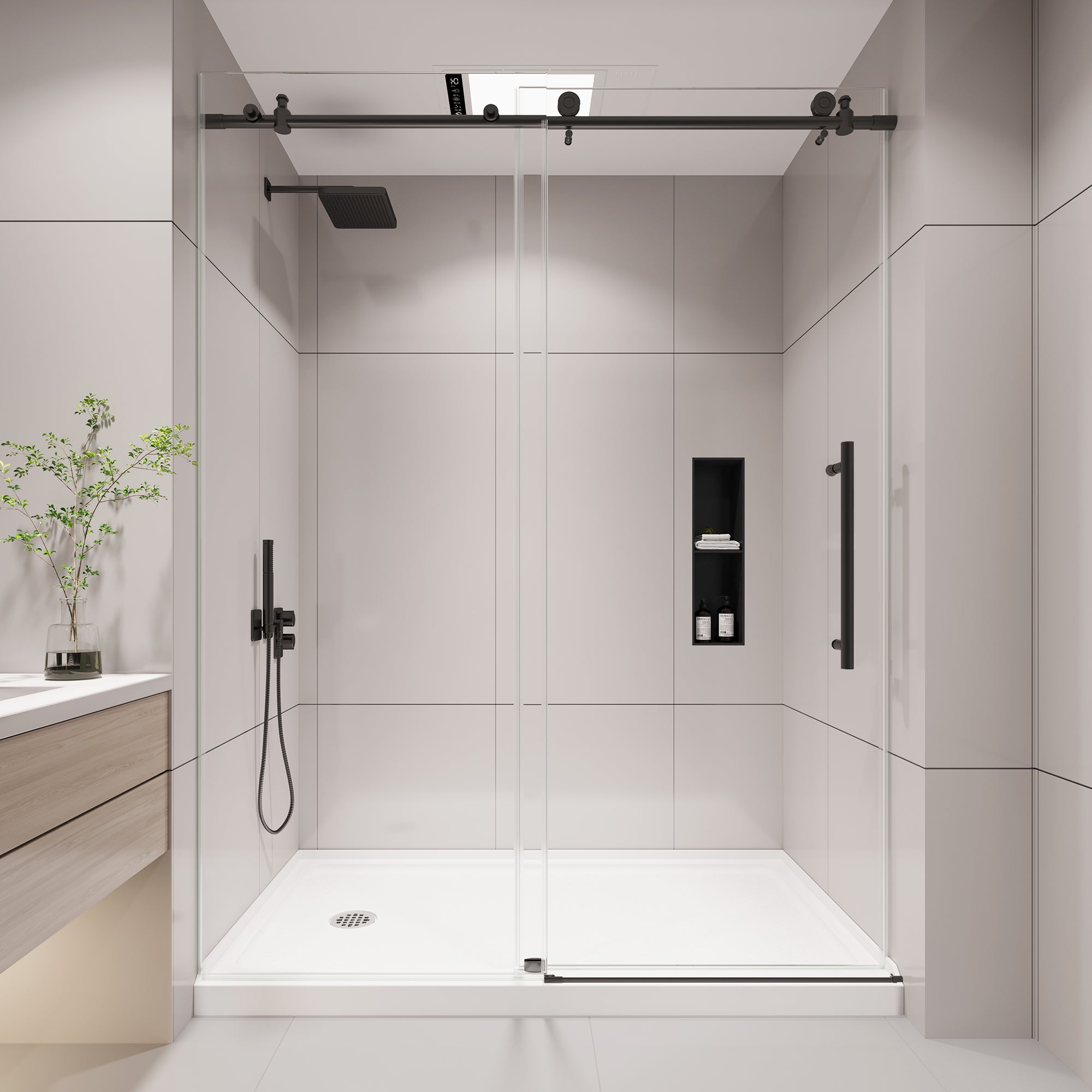

Black shower door hardware and brushed nickel both work, but they send the bathroom in different directions. Black reads sharper and more defined; brushed nickel softens the look and blends more easily with mixed metals and warmer tile. The right finish usually comes down to the room’s lighting, the faucet finish, the amount of contrast you want, and how much cleaning visibility you can live with.
The Short Answer
If you want stronger contrast and a more defined shower outline, black hardware is usually the better fit. If you want a finish that blends more easily with warm tile, mixed metals, or a softer bathroom palette, brushed nickel is the safer choice. A good rule of thumb: choose black for contrast, brushed nickel for blend. Then confirm the finish works with your lighting, faucet set, and glass style before ordering.
How to Decide by Room Conditions
This is not just a color decision. In a real remodel, the finish changes how the shower reads against tile, grout, mirrors, and vanity hardware. Black hardware makes the frame lines easier to see, which can help a shower look intentional in a bright white or light-toned bath. Brushed nickel usually feels less dominant, which helps when the bathroom already has a lot of visual activity from patterned tile, busy grout lines, or multiple metal finishes.
Older homes often complicate finish decisions because the opening may not be perfectly square and the walls may not be perfectly plumb. A darker finish can make the edge line feel more obvious, which is good when the layout is clean, but less forgiving when a wall is visibly out of plane. In those rooms, the finish matters, but the fit and installation quality matter more.
- Choose black if your faucet, towel bars, or lighting already use a dark accent and you want the shower to read as a deliberate frame.
- Choose brushed nickel if you want a finish that works across warm and cool palettes without drawing too much attention.
- Choose black if the room has strong natural light and enough contrast to support the darker hardware.
- Choose brushed nickel if the bathroom is small, dim, or already has several competing finishes.
- Check cleaning habits: both finishes show water spots differently, but black tends to make dried mineral marks and soap residue easier to notice on hardware edges.
For homeowners still deciding which enclosure style belongs in the room, Black Shower Doors are worth reviewing alongside the rest of the shower layout. That helps you judge whether the finish belongs with the door style you actually need, not just the color you like in a mood board.
Black vs. Brushed Nickel at a Glance
| Finish | Best for | Limitations | What to watch in a remodel |
|---|---|---|---|
| Black hardware | High-contrast bathrooms, white tile, bold vanity or faucet accents, more defined shower lines | Can look heavy in low-light rooms; marks and dust can stand out on dark surfaces | Match nearby fixtures so the shower does not look isolated from the rest of the room |
| Brushed nickel | Warm tile, mixed metal rooms, softer visual transitions, traditional or transitional baths | Less contrast; can disappear if the room already has pale finishes and reflective surfaces | Coordinate with faucet sheen and cabinet pulls so the metals feel intentional |
The wrong finish usually does not create a structural problem, but it can create a visual one that homeowners notice every day. A black frame in a tight, dim bathroom can make the shower feel heavier than expected. Brushed nickel in a crisp white room can look too faint if you wanted the enclosure to anchor the design. That is why finish choice should happen after you know the lighting and tile plan, not before it.

Check the Opening, Light, and Fixtures
Finish choice becomes easier when you test it against the room’s actual conditions. Look at the shower in daylight and again at night with the vanity light on. Black hardware often gains definition under bright light, while brushed nickel can read differently depending on whether the room uses warm or cool bulbs. If the bathroom lighting is weak, black may feel too dominant. If the room is already bright and high-contrast, brushed nickel may disappear.
Do not judge the finish from a small sample alone. Hold the sample near the tile, faucet, and mirror frame if possible. The goal is not perfect matching; it is visual balance. A bathroom can use mixed metals successfully, but the mix needs a reason. If the faucet, shower hardware, and cabinet pulls all fight for attention, the room starts to feel patched together.
Also watch for layout issues that affect the final look. A shower door can fit the opening and still feel wrong if it blocks the vanity path or crowds a toilet. A vanity drawer may clear the room on paper but still hit the casing once the door is installed. Those conflicts are not finish problems, but they can make one finish feel more awkward than the other because contrast makes the layout easier to notice.
Where brushed nickel usually wins
Brushed nickel is often the safer choice when the bathroom already has warm tones, wood cabinets, beige or cream tile, or chrome-adjacent plumbing fixtures. It also works well when the homeowner wants the shower hardware to stay in the background and let stone, tile, or glass do the visual work.
Where black usually wins
Black usually works better when the bathroom needs structure. That includes bright white tile, large-format light tile, frameless glass with dark accents, or a room where the vanity hardware and lighting trim already lean dark. In those rooms, black hardware helps the shower enclosure read as part of the overall design instead of an afterthought.
For homeowners comparing finish and enclosure type together, the broader KPUY Shower Doors collection is a practical place to see how finish, glass style, and door layout work together. That is especially useful if you are choosing between a framed look and a lighter glass-forward look.

Pre-Order Checklist
Use this checklist before you commit to a finish. It keeps the decision grounded in the room instead of only in a sample card or showroom display.
- Measure the finished opening, not just the old door size. Tile thickness and wall buildup can change the final width.
- Check the opening at the top, middle, and bottom. Older walls are often slightly out of plumb, and that affects how the hardware line reads.
- Look at the height on both sides if the threshold or curb is not perfectly level.
- Stand back and study the room in daylight and artificial light. Finish appearance changes with bulb temperature and shadowing.
- Compare the hardware finish with the faucet, drain trim, towel bars, and cabinet pulls.
- Check whether the shower door swing or track will conflict with the toilet, vanity, or doorway casing.
- Confirm wall support and anchor points before assuming a heavier glass setup is suitable for the wall.
- Decide how much visual contrast you want. If you want the enclosure to stand out, black is the stronger read. If you want it to recede, brushed nickel is usually calmer.
A practical warning: the finish does not fix a bad opening. If the curb slopes the wrong way, the wall is far out of plumb, or the drain rough-in is off, the installation problem will still be there after the hardware is selected. Finish choice should come after the layout is confirmed, not before it.
Wrong choice causes this problem: a finish that fights the rest of the room can make a small remodel feel visually crowded. For example, black hardware in a low-light bath can make the shower line look heavier than the actual enclosure, while brushed nickel in a high-contrast bathroom can make the hardware fade so much that the door looks unfinished. Neither finish is wrong in general; it is wrong when it conflicts with the room’s lighting and materials.
Frequently Asked Questions
Does black shower hardware show wear more than brushed nickel?
Black hardware can make dust, dried water spots, and mineral residue more noticeable, especially on flat or low-sheen surfaces. Brushed nickel tends to hide minor marks better because the finish has more visual texture. That said, both finishes need regular wiping if your water leaves mineral deposits. The difference is mostly in how obvious the marks look between cleanings.
Can I mix black shower hardware with brushed nickel faucets?
Yes, but the room needs a clear plan. Mixed metals work best when one finish is primary and the other is secondary. For example, black shower hardware can pair with brushed nickel cabinet pulls if the faucet and lighting stay consistent. If every fixture uses a different finish, the bathroom can feel uncoordinated. Keep the mix intentional, not accidental.
Which finish is better for a small bathroom?
There is no universal answer. Black can make the shower outline clearer, which some small bathrooms need. Brushed nickel can make the enclosure recede, which can help the room feel less crowded. If the bathroom is small and dim, brushed nickel is often easier to live with. If the bathroom is bright and white, black may actually improve the structure of the space.
What to Check Next
If you are torn between black and brushed nickel, make the decision from the room outward: tile color, lighting temperature, faucet finish, and how much contrast you want the shower to carry. Then confirm the opening, wall plumb, and clearance before you order. If the enclosure style is still undecided, review the Black Shower Doors collection as part of the finish check, and compare it against the rest of the bathroom so the hardware supports the layout instead of fighting it.

Leave a comment
All comments are moderated before being published.
This site is protected by hCaptcha and the hCaptcha Privacy Policy and Terms of Service apply.