
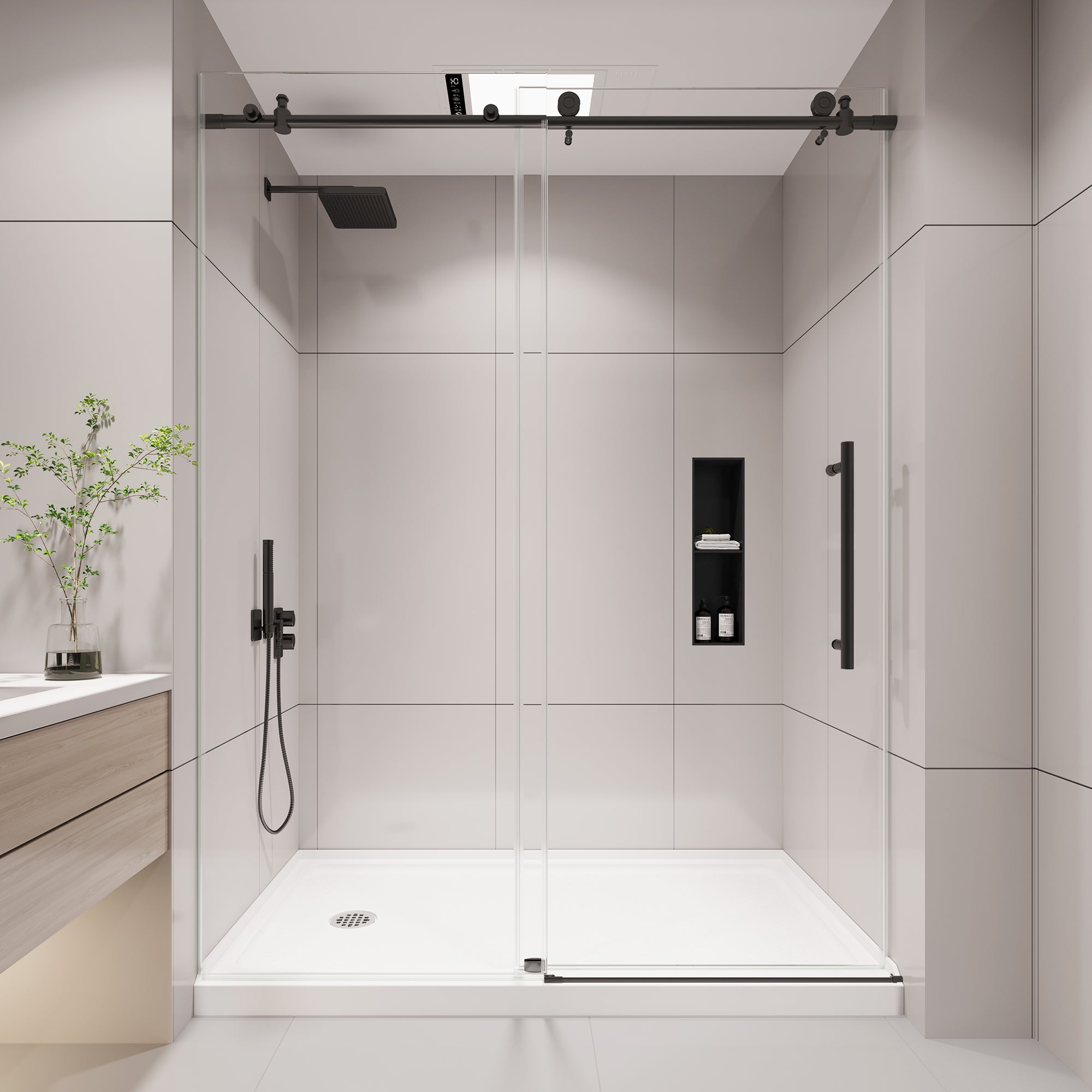
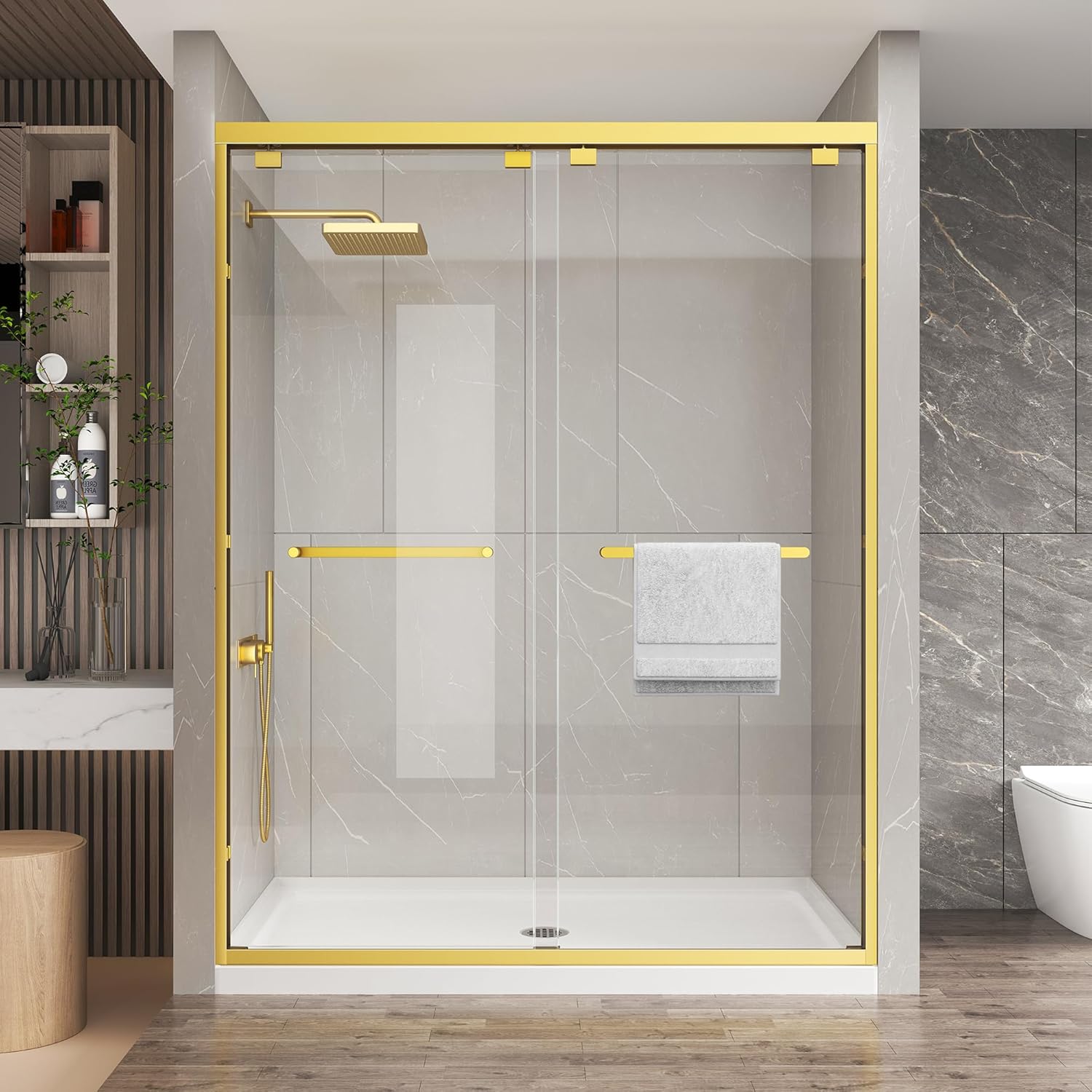
Black framed and black frameless shower doors both work well, but they create very different looks and install very differently. If you want a bold, defined outline that matches other black bath fixtures, framed usually gives you that stronger visual border. If you want the glass to feel lighter and more open, frameless usually wins. The better choice depends on the size of the shower, the wall conditions, and how much visual structure you want in the room.
The Short Answer
Black framed shower doors look more defined, more architectural, and usually more traditional or industrial. Black frameless shower doors look cleaner, lighter, and more open, which is why they fit many 2026 bathroom remodels. If your bathroom is small or you want the glass to visually disappear, frameless is often better. If you want a stronger outline and less concern about wall irregularity, framed is often the safer visual and install choice.
How the Two Looks Differ
The difference is not only about style. It changes how the shower reads in the room. A black framed door gives the opening a clear edge. That can look sharp against white tile, stone-look porcelain, or mixed material walls. It also helps the shower stand out as a feature instead of blending into the background.
Black frameless glass still uses black hardware in many cases, but the glass surfaces carry most of the visual weight. The result is lighter and less segmented. In a small bathroom, that matters. You see more continuous tile and less metal. The room usually feels larger, even if the shower footprint has not changed.
From a remodeling standpoint, the decision should start with the finished opening, not just the door style in a brochure. A shower opening may measure differently at the top, middle, and bottom. Older homes often have walls that are not perfectly plumb, and that can affect how cleanly a frameless door sits. A framed door can sometimes disguise small imperfections better because the perimeter trim gives you more visual forgiveness.
| Decision Factor | Black Framed | Black Frameless |
|---|---|---|
| Visual style | Bold outline, more structure | Cleaner, lighter, less segmented |
| Best fit for small bathrooms | Can feel more closed in | Usually feels more open |
| Wall irregularities | More forgiving visually | Needs tighter finished opening accuracy |
| Hardware presence | More visible framing | Minimal look, hardware stands out more |
| Maintenance appearance | Black lines can highlight water spots and soap residue | Glass shows water spots more clearly, but looks less busy |
For homeowners focused on the broader enclosure style, a good place to compare layout options is the Frameless Shower Doors collection. Even if you are not buying yet, it helps to see how the visual weight changes when the frame is removed.

Measure Before You Decide
The finished opening matters more than the rough opening. That means you need the actual tile-to-tile dimensions, not the stud bay width or the old door size. Measure at the top, middle, and bottom. Then measure both diagonals if the opening is close to square. If those numbers are off, the door style can still work, but the level of adjustment available changes.
This is where field conditions show up. Tile thickness can change the final opening width. So can backer board, waterproofing layers, and the way the tile was cut at the edges. A base that fit the old shower may still need a different threshold detail after the remodel. If the curb is not level or the walls lean, frameless glass may need more precise templating or adjustment allowances.
Black framed doors are usually easier to integrate into a situation with minor irregularity because the frame visually masks some of the unevenness. Black frameless doors can still work very well, but the walls, curb, and glass alignment need to be cleaner. That does not mean perfect, just controlled.
- Measure after finishes are in place if tile, waterproof backer, or new wallboard changes the opening.
- Check plumb at both jamb walls because a slight lean affects glass fit.
- Confirm threshold height so the door clears the curb and still contains spray.
- Verify hardware clearance around towel bars, niches, and nearby mirrors.
- Look at floor slope before deciding how the bottom seal or sweep will land.
For official planning context on bathroom layout and safety considerations, the NKBA is a useful reference point for space planning principles and practical bathroom design thinking.
Installation and Field Conditions
Installation is where the style decision becomes real. A framed door often gives installers more tolerance for small wall variation and slightly uneven surfaces. The frame can help stabilize the opening and create a more defined edge. Frameless doors rely more heavily on accurate wall layout, proper anchors, and sound support at the hinge or clamp locations.
That matters in remodels, especially after demolition. Once old tile, backer, and trim are removed, the wall may not look like the plan anymore. It is common to find a stud line that is not exactly where the old door was anchored, or a curb that slopes a little differently than expected. If the new shower base or curb does not line up with the drain or finished wall surfaces, the final door fit changes with it.
Black hardware also changes the look of every small inconsistency. A darker frame can visually define the opening, which is helpful in some bathrooms and less helpful in others. A frameless door places more attention on the glass itself and the straightness of the installation. If the walls are out of plumb, a frameless setup may still be fine, but it is not the style to choose if you want maximum visual forgiveness.
The practical question is this: do you want the shower door to hide small imperfections or highlight a cleaner, lighter enclosure? For many homeowners, that answer is what decides framed versus frameless, not the black finish alone.

Which Look Fits Your Bathroom
Use the room size, wall layout, and overall finish direction to narrow the choice. Black framed doors work well in bathrooms with black mirrors, black faucets, or a more defined graphic look. They can also suit transitional spaces where you want the shower to feel anchored and deliberate.
Black frameless doors usually suit rooms that already have strong tile or stone surfaces and need less visual interruption. They are also a smart choice in tighter bathrooms, because the open glass surfaces help the room feel less crowded. A small primary bath, a compact hall bath, or a shower tucked between walls often benefits from that lighter effect.
If you are combining a shower door with other black accents, the finish can pull the room together. That said, the glass style still matters more than the color alone. A black framed door can look heavy if the room already has dark tile and low light. A frameless layout can look cleaner if the wall tile is bold and you want the shower to stay visually quiet.
Here is a simple way to think about it:
- Start with the finished shower opening and confirm actual measurements.
- Check whether the walls, curb, and floor are plumb, level, and square enough for a tight glass fit.
- Decide how much visual structure you want in the room.
- Look at swing clearance, adjacent fixtures, and whether a door would hit the vanity or toilet.
- Choose the style that matches both the room shape and the amount of visual openness you want.
For homeowners comparing black finish options across door styles, the Black Shower Doors collection is the most relevant place to start because it keeps the finish focus in one category while you compare frame profiles and layout needs.
Choose black framed if:
You want a more defined border, the opening is not perfectly uniform, or you prefer a stronger architectural line in the bathroom.
Choose black frameless if:
You want the shower to look lighter, the room is small, or you prefer a cleaner enclosure with less visual interruption.
Think twice before choosing either if:
The shower walls are significantly out of plumb, the curb is uneven, or you have not finalized tile thickness and finished opening dimensions.
Planning Before You Order
Before you order, confirm the installation conditions, not just the style. A black shower door has to work with the actual room, not the drawing. That means checking wall finish thickness, tile edges, nearby fixtures, and the direction the door opens or slides. It also means looking at water containment from the inside out. Good sealing starts with a well-planned base, a proper threshold, and the right door type for the opening.
For shower base planning and threshold conditions that affect door fit, the Shower Bases collection is a practical reference. The door and base should be planned together, especially if the curb height, drain location, or finished floor buildup is changing during the remodel.
Do not ignore the small details. A door may fit on paper and still feel wrong if the handle clears poorly, if the hinge side is tight against a wall cabinet, or if a sliding track sits too close to a shampoo niche. In a real jobsite, those are the details that create callbacks. Measure the opening, confirm the wall condition, and review the layout before you commit.
Other points worth checking:
- Stud locations for secure attachment points
- Tile edge condition where the frame or glass meets the wall
- Silicone sealing path at the base and jambs
- Glass thickness and hardware clearance for the chosen style
- Nearby electrical planning if the remodel also changes lighting or adds a smart toilet outlet
For safety and bathroom planning context, the CPSC is a helpful source for general household safety awareness, including glass and installation-related caution.
Frequently Asked Questions
Does black frameless glass make a bathroom look bigger?
Usually, yes. Frameless glass reduces the visual boundary around the shower, so the room often feels more open. The effect is strongest in smaller bathrooms or spaces with lighter tile. The actual square footage does not change, but the sightlines usually improve.
Is a black framed shower door easier to install?
In many remodels, it can be more forgiving because the frame can visually cover small irregularities. That said, installation still depends on wall condition, anchor locations, and a properly finished opening. It is easier visually, not automatically easier mechanically.
Which one hides water spots better?
Neither hides them completely. Black framing can show mineral buildup on the finish, while frameless glass can show spots on the glass itself. Good ventilation, regular wiping, and proper sealing matter more than the style if you want the door to stay looking clean.
Final Takeaway
Black framed shower doors usually win on structure, visual definition, and forgiveness in less-than-perfect openings. Black frameless shower doors usually win on openness, lighter sightlines, and a cleaner overall look. The better choice depends on the room size, wall accuracy, and how much of the shower you want to see.
Start with measurements, finished wall thickness, and the condition of the curb and walls. Then choose the look that fits the remodel, not just the mood board. If you are narrowing the options, the Frameless Shower Doors collection can help you compare the cleaner-glass direction against the more defined framed style you may already have in mind.

Leave a comment
All comments are moderated before being published.
This site is protected by hCaptcha and the hCaptcha Privacy Policy and Terms of Service apply.