
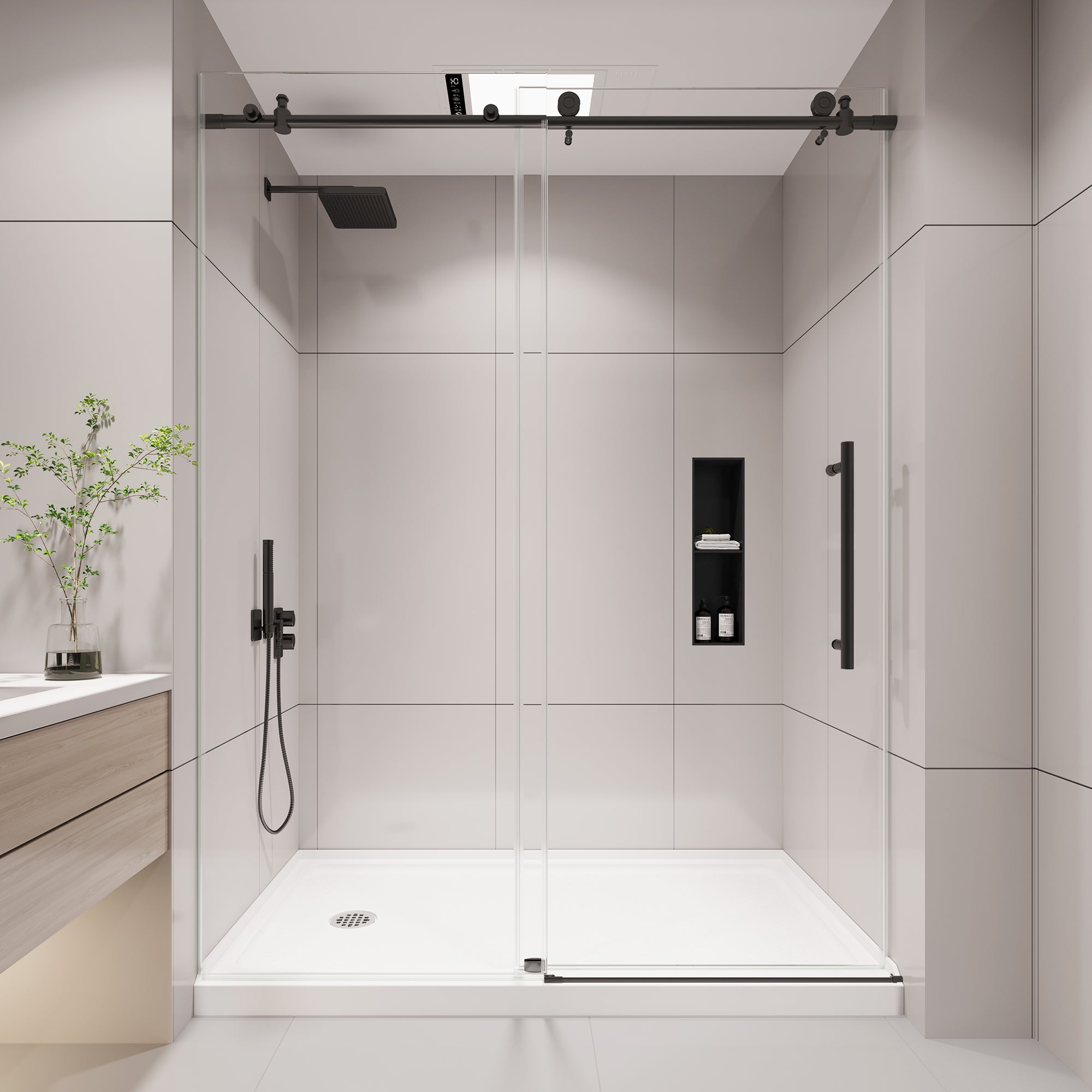
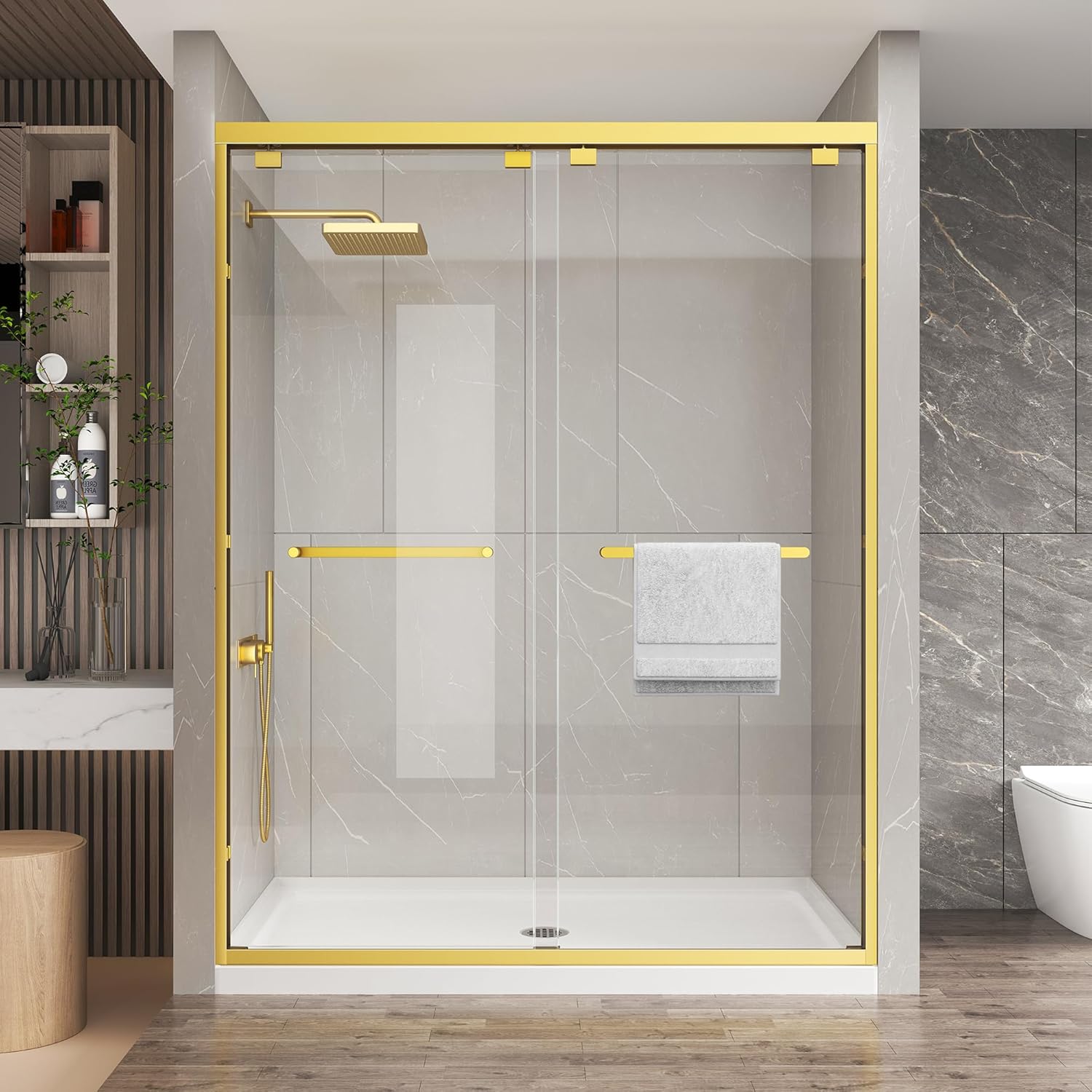
Pivot shower doors can work well in small bathrooms, but they are not automatically the better choice. The real question is whether the door has enough swing clearance and enough dry-floor space to open without hitting a toilet, vanity, towel bar, or casing. If the room is tight, the better door is the one that fits the finished opening and the traffic path, not just the shower footprint.
The Short Answer
Pivot shower doors are often a good fit for small bathrooms only when the swing path stays clear. If the door can open without clipping a toilet, vanity, or nearby wall, a pivot layout can feel simple and roomy. If clearance is tight, a sliding door or fixed panel usually works better. Rule of thumb: measure the finished opening and the door swing path before deciding, not after tile is installed.
How to Judge the Layout
Small bathrooms fail on clearance more often than on style. A pivot door needs space in front of the shower, and that space is usually the same area used to stand at the vanity, reach a toilet paper holder, or walk past the shower entry. If the bathroom layout is already crowded, a door that opens outward can create daily friction even if it technically fits the shower opening.
Older homes add another layer: walls are often out of plumb, floors slope slightly, and the finished opening can vary from top to bottom. That means a door that looked fine on the old rough opening may bind or leave uneven gaps once new tile, backer board, and trim thickness are added. A pivot door is less forgiving than many homeowners expect because the swing and hinge position have to work with the real finished room, not the drawing.
| Layout factor | Pivot door fit | What can go wrong | Better approach if space is tight |
|---|---|---|---|
| Door swing clearance | Good only when the outward swing stays open | Door hits toilet, vanity, or wall trim | Sliding door or fixed panel |
| Finished opening accuracy | Needs a true, plumb opening | Uneven gaps or rubbing at hinges | Measure after tile and wall finish are complete |
| Water containment | Can be strong if sweep and seals line up | Misalignment at the threshold creates splash-out | Check curb slope and threshold height first |
| Daily use in a narrow aisle | Works when the aisle stays open | Feels cramped during entry and cleaning | Sliding or fixed-panel layout |

If you are still at the planning stage, start by checking the shower opening against the rest of the room, not just the shower base. A pivot door may be the right call for an alcove or corner shower if the room in front stays open enough. For homeowners comparing enclosure styles, the Pivot Shower Doors collection is the most relevant place to start because the door movement is the decision point, not the glass alone.
Pivot vs. Other Space-Saving Choices
A pivot door is not the only compact-layout option. In small bathrooms, the best result often comes from matching the door type to the traffic pattern outside the shower. A pivot door works best when you have a clear landing area in front of the opening. Sliding and fixed-panel layouts work better when the room in front is already busy.
- Pivot door: Best when the swing path stays clear and you want a simple entry without a track across the opening.
- Sliding door: Better when there is no extra floor space for an outward swing.
- Fixed panel: Useful when you want a more open feel and the shower layout controls splash well.
- Framed vs. frameless: The frame changes visual weight and hardware requirements, but it does not solve a clearance problem by itself.
A wrong choice usually shows up fast. If a pivot door is placed where a vanity drawer, toilet tank, or bathroom entry door already uses the same space, the bathroom starts to feel smaller than it is. The door may open fine during a demo, but once the room is used every day, the path feels crowded. That is the common mistake: judging the shower in isolation instead of judging the whole room.
For homeowners who are still deciding between enclosure styles, pivot doors are a comfort choice, not a universal space saver. They feel clean and straightforward when they fit. They feel awkward when every inch in front of the shower matters.
What to Measure Before You Order
Start with the finished opening, not the old door label. If the bathroom is being remodeled, the numbers after tile and wall finish are the ones that matter. Tile thickness can shrink the opening. New backer board can change the wall plane. Even a small out-of-plumb condition can affect hinge alignment and reveal gaps that are obvious once the glass is installed.
Measure the opening at top, middle, and bottom. Record the width at each point and note the smallest number. Then check the height on both sides. If one side is lower, that usually means the floor or curb is not perfectly level. That matters because pivot doors depend on consistent alignment and a stable threshold contact.
Also measure the floor space outside the shower. A pivot door may clear the opening itself but still conflict with the toilet, vanity edge, towel bar, or the bathroom entry door. If the room includes a cabinet or drawer unit, check whether a drawer can open while the shower door is fully swung out. A drawer may clear the room on paper and still hit the door casing in real use.
- Measure the finished shower opening at the top, middle, and bottom.
- Measure height on both sides and note any floor slope or curb variation.
- Check wall plumb with a level, especially at the hinge side.
- Confirm the threshold is sloped back toward the shower, not toward the bathroom floor.
- Mark the pivot swing path on the floor and test it against the toilet, vanity, and casing.
- Verify hardware clearance for tile thickness, wall anchors, and nearby fixtures.
- Confirm the shower base or curb line matches the planned door location.
That last point matters more than many homeowners expect. A shower base can fit the footprint and still cause trouble if the door pivot lands too close to the curb edge or the drain area. If you are still deciding on the enclosure side of the remodel, it helps to review the full KPUY Shower Doors selection alongside the room measurements so the door style matches the actual opening and not just the rough framing.
Common Small-Bathroom Mistakes
In a compact room, the most expensive mistakes are usually layout mistakes, not finish mistakes. A pivot door can be perfectly good and still fail the room if the surrounding clearances are wrong.
- Measuring the rough opening instead of the finished opening. Tile and wall build-out change the final width.
- Ignoring out-of-plumb walls. A door may bind or leave uneven reveals if the walls lean even slightly.
- Forgetting toilet and vanity clearance. The swing path matters as much as the shower width.
- Skipping threshold slope checks. If water runs toward the bath floor, the door is only part of the problem.
- Choosing pivot hardware without checking wall support. Heavier glass and hinge loads need sound anchoring.
- Assuming a base will solve the layout. A base can fit the room and still miss the drain rough-in or curb alignment.
Another practical issue is water control. Pivot doors can do a good job when the sweep, glass position, and threshold line up, but a small bathroom gives mistakes less forgiveness. If the curb is too flat or the shower floor slopes the wrong way, water collects at the outside edge and the bathroom floor takes the hit. That is a design and installation issue, not just a door issue. Plumbing and bathroom planning references from NKBA are useful when you are checking clearances and layout choices in a tight room.
When Pivot Doors Work Best
Pivot shower doors tend to work best in small bathrooms when the shower opening is not directly crowded by another fixture and when the room outside the shower has a clear open path. They are often a strong option for remodels where the homeowner wants a straightforward entry without a bottom track across the main walking area.
They also make sense when the door can open without hitting a vanity edge or the bathroom entry door. If the shower is in a corner and the room beyond it is wider than it first appears, a pivot door can feel more open than a heavier framed enclosure. The key is that the door movement has to match the rest of the room, not just the shower footprint.
For smaller rooms that still need a cleaner visual line, a pivot layout can be paired with careful glass placement and hardware planning. The result depends on measurements, curb slope, and whether the wall finish gives the hinge side enough support. If those parts are off, the door becomes a daily nuisance. If they are right, the shower feels easier to enter and less boxed in.
Frequently Asked Questions
Do pivot shower doors make a small bathroom feel larger?
They can, but only if the swing path does not crowd the room. A pivot door often looks lighter than a bulky framed enclosure, and it avoids a track across the opening. But if the door opens into a tight aisle beside a vanity or toilet, it can make the room feel more cramped, not less.
What is the biggest measurement mistake with pivot doors?
The biggest mistake is measuring only the old opening and ignoring the finished surfaces. Tile, backer board, trim, and out-of-plumb walls change the actual fit. You also need to measure the room outside the shower, because a door that fits the opening can still hit a toilet tank, cabinet, or casing when it swings open.
Are pivot doors harder to keep watertight in a small shower?
Not inherently, but they depend heavily on good slope, proper threshold contact, and accurate alignment. In a small shower, a small error is easier to notice because the splash zone is close to the bathroom floor. If the curb slopes the wrong way or the sweep does not meet the threshold correctly, water control suffers quickly.
Final Takeaway
Pivot shower doors are better for small bathrooms only when the room has enough swing clearance and the finished opening is measured correctly. If the bathroom is tight in front of the shower, a sliding or fixed-panel layout is usually the safer layout decision. Check the top, middle, and bottom widths, the threshold slope, and the clearance around the toilet and vanity before ordering. If you are still choosing the enclosure style, the Pivot Shower Doors collection is the right place to compare options after the layout is confirmed.

Leave a comment
All comments are moderated before being published.
This site is protected by hCaptcha and the hCaptcha Privacy Policy and Terms of Service apply.