
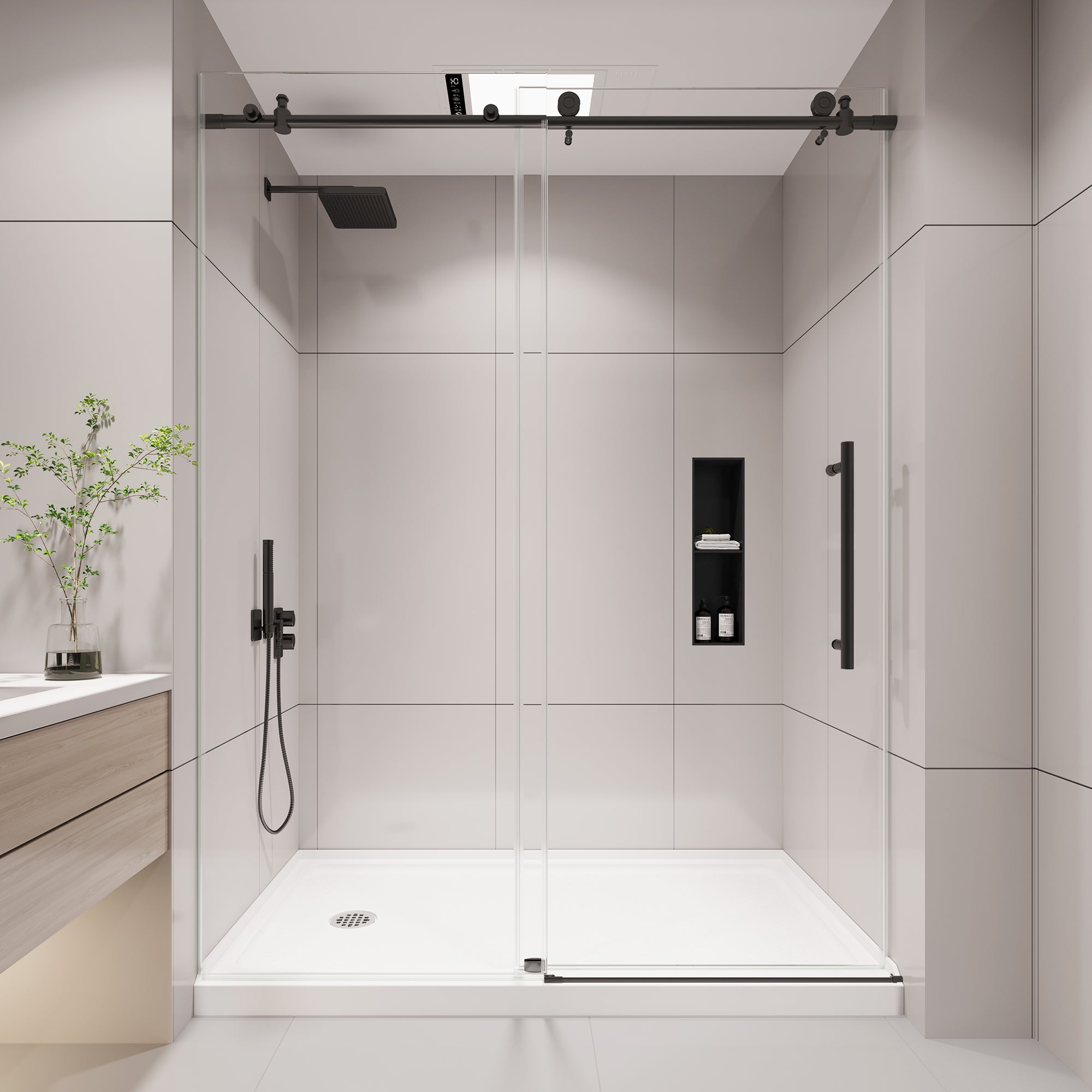
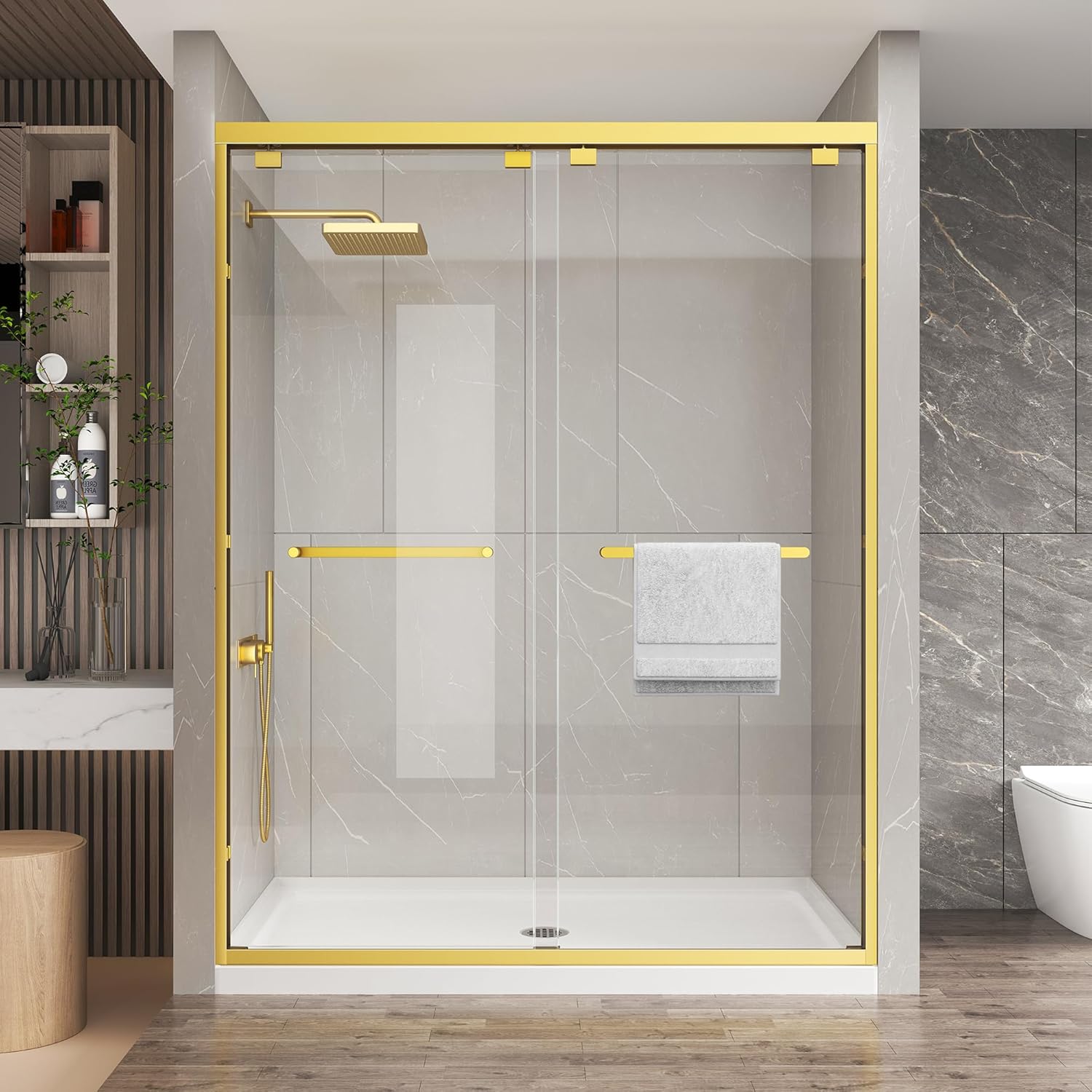
A frameless glass shower door that drags across the threshold isn’t just annoying — it’s a wear-and-tear problem that leads to scratched glass, torn vinyl seals, and water leaks. For 20+ years I’ve been on hundreds of remodel jobs where a “dragger” started as a small nuisance and ended up costing homeowners a full door replacement. In 2026, frameless showers remain a top interior trend for clean lines and easier maintenance, but installation tolerances are tighter than ever. This guide walks through the real diagnostics and fixes I use on the job: no fluff, just the tools and steps that actually work.
Quick answer (featured snippet)
Short answer: The door usually drags because of hinge alignment, a bowed bottom edge, an out-of-plumb jamb, or a damaged bottom guide. Fix it by checking hinge set screws and pivot adjustments, shimming the jamb or header, replacing or correcting the bottom guide/bumper, and ensuring the curb slope and drain assembly aren’t lifting the glass. For most homeowners, a targeted hinge adjustment and a new bottom guide solve the problem within an hour.
Diagnose the cause
Before you start loosening screws, run a quick diagnostic. I always follow this order because the simplest, most common issues are mechanical and quick to correct.
- Visual check of the bottom edge and guide channel for chips, gaskets or debris.
- Hold the glass and see where it first contacts the curb — leading edge, center, or trailing edge.
- Measure jamb plumb and header level with a torpedo level; record any out-of-plumb condition in inches over the height.
- Check hinge/pivot set screws for play. Most frameless doors use top and bottom pivot points or continuous hinges with adjustment screws.
- Inspect the curb slope and drain flange — any warping can lift the glass.
Key measurements to note: glass thickness (¾" or 3/8" tempered), gap clearance between glass and threshold (typically 3/16"–½"), hinge offset, and how many degrees the wall is out-of-plumb. These dimensions determine if you need shims, thicker seals, or a new bottom guide.
For safety and code references, tempered glass and safety glazing requirements are set by standards such as ANSI, and design guidance for kitchens and baths is covered by the NKBA. These are good references if you suspect non-compliant glass or installation tolerance issues.

Step-by-step fixes
Minor adjustments (first line of defense)
- Tighten hinge/pivot set screws. Loose screws allow the door to tilt and drag. Use the correct hex or Torx driver; never overtighten — just remove play.
- Clean the bottom guide and tracks. Hair, grout, and calcium can lift the glass. A small brush and mineral spirits do an effective job.
- Adjust top/bottom pivots. Many pivots have an eccentric cam that adjusts the glass plane. Turn small increments and re-check the gap.
Shim and realign for out-of-plumb walls
If the wall is not plumb by more than 1/4" over 96", the door will bind. The proper fix is to shim the hinge jamb or header so the hinge plane is true.
- Remove the hinge from the glass (support the glass) and mark the shim locations.
- Install thin metal or composite shims behind the hinge plate against the finished wall, not the tile surface. Seal shim edges with neutral-cure silicone.
- Reinstall hinge, adjust pivot cams, and check the sweep across the curb.
Tip: On tile walls, never rely on grout joints to accept screws/shims. Use anchors or screw into a blocking behind the tile. If blocking was not installed during rough-in, you may need to create surface-mounted backing under the hinge or use a heavy-duty expansion anchor per IPC/UPC recommendations.
Replace bottom guide, sweep, or pivot if worn
Most dragging problems that persist after hinge adjustment are tied to the bottom guide or the continuous sweep along the glass edge. The bottom guide is a replaceable part that centers the glass and prevents wobble.
- Measure the existing guide style — U-channel, roller guide, or plastic bottom bumper. Order a matching part rated for your glass thickness.
- When replacing, install the guide so the glass rides with a small clearance (about 1/8"–3/16"). Too tight and it drags; too loose and it clatters.
- Use stainless steel screws and silicone sealant to prevent water getting under the guide and lifting tiles or the drain flange.
Replacing a worn guide is one of the most cost-effective fixes. I carry a selection of guides on service calls for this reason.

When to resurface or replace the curb
Sometimes the curb slope or the drain assembly is the culprit. If the curb has been rebuilt or tiles reset and the slope was altered, the glass may now sit on a high spot.
| Symptom | Likely cause | Typical fix |
|---|---|---|
| Door drags in the middle | Warped glass edge or bowed curb | Check glass flatness, resurface curb, or add soft sweep |
| Door drags only when closed tight | Top pivot out of plane | Adjust pivot cam or shim hinge plate |
| Glass clears when lifted | Insufficient clearance/guides worn | Replace bottom guide and adjust gap |
If the drain flange is sitting high because of a replacement pan or tile build-up, you may need to lower the flange or raise the door plane slightly. That’s where access to the drain and curb becomes necessary — sometimes a partial curb rebuild is unavoidable.
Tools, parts, and materials
Here’s a practical list I bring to every dragging-door service call:
- Hex/Torx drivers and a 1/8"–1/4" Allen set
- Torpedo level and 4' level
- Feeler gauges (0.010"–0.125")
- Replacement bottom guides, rubber sweeps, and hinge shims
- Stainless fasteners, marine-grade neutral-cure silicone, and small shims
- Caulk gun, small brass brush, and mineral spirits for cleaning
Material notes: Use tempered glass only (per ANSI standards) and match thickness. Common frameless doors are 3/8" (10 mm) or 1/2" (12 mm). The tolerances in the glass fabrication and the installation are tight — typically ±1/16" — so always measure before ordering replacement parts.
Common on-site situations and real-world fixes
On older houses, walls are often out-of-plumb and the tile installer didn’t leave room for door tolerances. I’ll share a real-site example:
Real-site experience: I once remodeled a 1940s bungalow where the tile setter packed mortar unevenly on the curb and the right wall was 3/8" out-of-plumb over a 78" height. The frameless door was installed without shims into the tile and the bottom guide had already chewed through a sweep. The solution was to remove the hinge, add 1/8" stainless shims behind the plate at three points, replace the bottom guide with a higher-profile stainless one, and re-bed the guide with neutral-cure silicone. Total time: 2.5 hours; cost far less than a new door.
That job illustrated two recurring realities: 1) older homes rarely have perfect framing or flat curbs, and 2) good installers plan for shims and blocking during the rough-in. If you’re planning a full remodel, specify blocking at hinge and pivot locations and call out the glass thickness on your rough-in plan.
For frameless shower doors and replacement parts, check out KPUY Shower Doors for compatible guides and sweeps that match common glass thicknesses.
Maintenance and prevention
Preventive maintenance keeps a small adjustment from becoming a costly failure.
- Check hinge set screws and pivot cams every 6 months.
- Clean bottom guide and sweep monthly if you have hard water.
- Replace rubber sweeps at the first sign of wear — a torn sweep changes how the glass rides and can cause binding.
- Keep the curb clear of standing water; prolonged saturation can loosen grout and lifts the drain flange.
Pro tip: If you get new tile or change the pan, re-check the door plane before final glass install. That’s the time to correct any curb slope issues.

FAQ
Why does my frameless shower door only drag when it’s wet?
Water can act as a lubricant or a mild adhesive depending on the surface finish and sweep material. If the sweep or guide is saturated with soap scum or mineral deposits, it changes the coefficient of friction and the glass may ride lower. Clean the guide and replace a saturated rubber sweep. If the curb is porous and soaks up water under the guide, re-bed the guide with neutral-cure silicone to prevent lift.
Can I fix a dragging frameless door myself or do I need a pro?
Small adjustments — tightening set screws, cleaning guides, and replacing sweeps — are homeowner-friendly if you’re comfortable supporting the glass and have basic tools. For shimming hinges, out-of-plumb corrections larger than 1/4", or curb/pipe access, call a contractor. Working with tempered glass and properly anchored hinges requires experience to avoid glass breakage and meet safety tolerances.
How much clearance should a frameless shower door have from the curb?
A typical clearance is 3/16" to 1/2" across the bottom edge. That gap prevents contact during opening and closing while keeping splashing controlled. Use feeler gauges to set the gap and adjust pivots or the bottom guide until you consistently hit that range.
For replacement parts and compatible styles, see KPUY Shower Doors which stocks common guides and sweeps for 3/8" and 1/2" tempered glass.
Final note: A dragging frameless shower door usually isn’t a sign you need a full replacement. Most problems are mechanical or related to field conditions — out-of-plumb walls, curb slope changes, or worn guides — and can be corrected. If your glass is chipped or the hinge hardware is corroded, replace those parts and confirm glass meets tempering and safety standards.

Dejar un comentario
Todos los comentarios se revisan antes de su publicación.
Este sitio está protegido por hCaptcha y se aplican la Política de privacidad de hCaptcha y los Términos del servicio.